
Похоже, что текст транскрипта отсутствует или не был предоставлен. Пожалуйста, пришлите сам транскрипт видео, чтобы я мог выполнить анализ и составить подробное резюме по указанной структуре.

📝 Y Combinator Blog
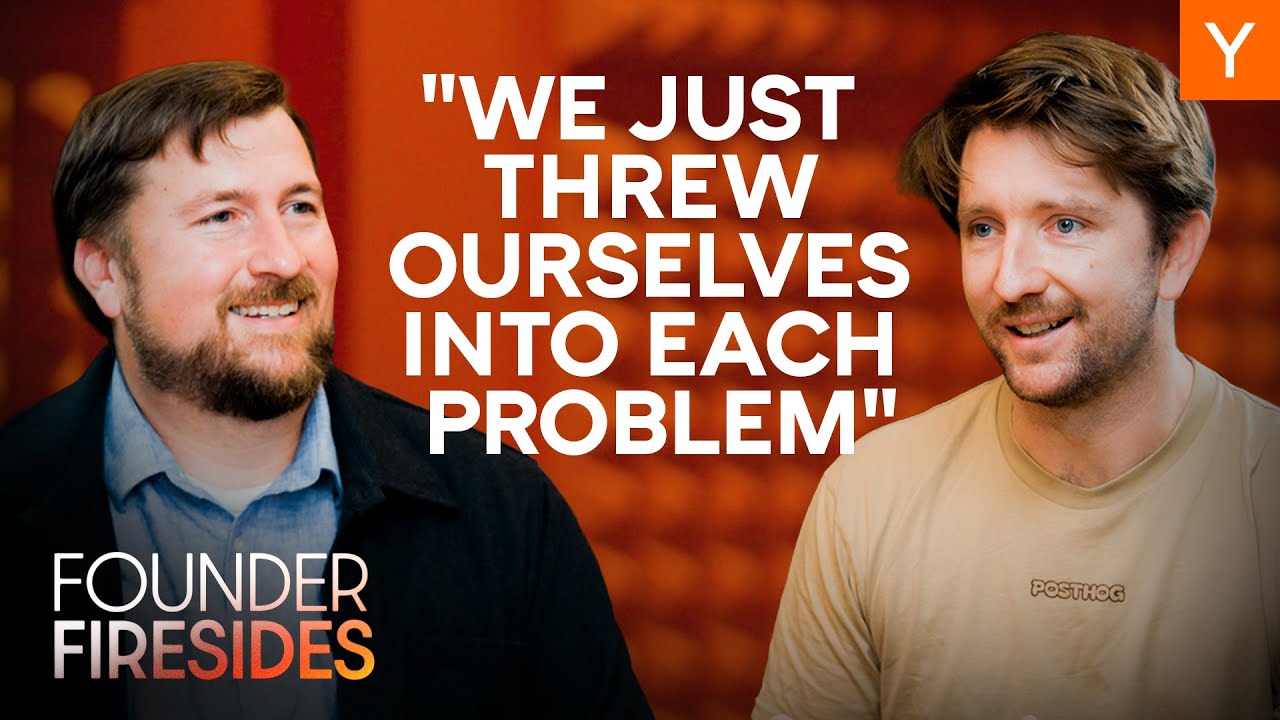
From Pivot Hell to Unicorn: How PostHog Built a Remarkable Developer-Focused Analytics Company
In the highly competitive world of tech startups, few stories are as inspiring as that of PostHog, a company that evolved through multiple pivots to emerge as a $1.4 billion-valued unicorn. We sat down with James Hawkins, CEO and co-founder of PostHog, to explore the journey from their early days in Y Combinator’s Winter 2020 batch to raising a $75 million Series Z round, and how they carved out a unique space in the crowded product analytics landscape by embracing openness, humor, and authenticity.
The Early Days: Pivoting Through “Pivot Hell”
James and his co-founder began their startup journey with a series of ideas, working through what many YC founders call “pivot hell”—a cycle of trying multiple ideas before finding product-market fit. Initially, they tried a sales territory management tool aimed at helping sales leaders optimize their pipeline, but despite positive initial feedback, actual user engagement was low. They quickly realized that building for sales leaders was challenging due to the poor signal-to-noise ratio and decided to pivot toward building tools for more technical users like engineers, who provide clearer, more actionable feedback.
Their YC application even featured a product where developers took surveys about technical debt during pull requests—a stepping stone on their path. However, the breakthrough came just weeks before Demo Day with the launch of open-source self-hosted product analytics, a tool designed to solve a frustration they faced repeatedly: the need to implement product analytics over and over again, often hindered by ad blockers and lack of data control.
The Breakthrough: Developer-Focused, Open Source Analytics
PostHog’s defining insight was recognizing that existing analytics tools were built primarily for product managers, often requiring engineers to implement cumbersome setups. They wanted something that engineers could own directly—one that was open source, self-hosted, and allowed querying data with SQL directly from their own infrastructure.
This fresh approach resonated strongly with the developer community. Launching on Hacker News, PostHog quickly gained traction as the most upvoted dev tool post of the year, marking the beginning of its rise. James recalls the excitement of this launch as a turning point, even though back then the product was still “mediocre” by today’s standards.
Fundraising in the Face of Adversity
Raising money in early 2020 was fraught with challenges. Just as PostHog was launching, the COVID-19 pandemic hit, causing many investors to pull back. What started as meetings with top-tier VC firms became a grind of securing small angel checks to keep the company afloat.
Despite the stress—especially with James’s wife pregnant back home and visa concerns for his co-founder—the team persevered. Eventually, they closed a seed round and quickly followed it with a Series A once the market recovered. James candidly admits their early pitches were “vanilla” and that learning to be more opinionated and passionate about their vision was key to winning investor confidence.
A New Era: Scaling Up with AI and Product Autonomy
Fast forward to today, PostHog is a team of 160+ people serving over 300,000 users with 16+ products in various stages of development. The company is aggressively expanding its product suite, leveraging AI to automate tasks like generating pull requests based on customer data insights.
James describes this phase as the most fun yet—comparing it to unlocking “rocket launchers” in a video game. After years of hard work laying the foundation, PostHog now has the resources and confidence to build deeply integrated tools that help product teams understand and improve their user experience autonomously.
Building Trust and Connection Through Radical Transparency
From day one, PostHog embraced building in public as a core strategy. Trust was paramount, especially for an open-source product analytics tool where users’ data privacy is critical. The company’s website goes far beyond typical marketing pages—it features detailed documentation, team bios with personal touches (like engineers’ pets!), a developer job board with unique filters, and a transparent company handbook.
This openness humanizes PostHog and fosters a community that feels connected to the people behind the product—an essential edge in a crowded market.
Standing Out with Humor and Contrarian Marketing
Perhaps one of the most memorable aspects of PostHog’s approach is their bold, humorous marketing—most notably their quirky billboards scattered around San Francisco. These ads parody vintage Americana and traditional corporate advertising with playful, offbeat messages like comparing session replay to tomato sauce’s “sweet taste of understanding.”
James explains their philosophy: in a world saturated with ads vying for attention, being funny and bizarre is more effective than playing it safe. This “transcending corporate tryhard” approach, combined with a culture of brutal internal feedback to hone every joke, helps PostHog cut through the noise and make a lasting impression.
The Website as the Sales Team
PostHog’s website is another standout feature, described by James as their primary sales tool. Unlike typical SaaS websites optimized for quick conversions, PostHog offers a rich, multi-dimensional experience designed to engage and educate their technically savvy audience.
They intentionally went beyond the “80/20” effort most startups settle for, pouring resources into making the site remarkable and polarizing—knowing it would attract passionate users and spark conversations, even if some don’t love it.
Key Takeaways from PostHog’s Journey
- Embrace Pivoting with Purpose: Don’t wait for perfect ideas; try multiple approaches to discover real problems worth solving.
- Build for Clear Feedback Loops: Target users who provide honest, actionable feedback—engineers over sales leaders in PostHog’s case.
- Be Transparent and Build Trust: Openness about your product, team, and company builds authenticity and loyalty.
- Invest in Remarkability: Whether it’s marketing, your website, or product, go beyond the norm to stand out in a crowded marketplace.
- Use Humor to Cut Through Noise: In today’s attention economy, being funny and bold can amplify your message far beyond traditional tactics.
- Scale with Confidence: After laying a solid foundation, leverage resources to pursue ambitious, innovative product visions—like AI-powered product autonomy.
- Persistence Pays Off: Fundraising and growth are tough, but consistent effort, learning, and resilience can lead to success.
Final Thoughts
PostHog’s story is a testament to the power of resilience, creativity, and authenticity in building a modern tech company. From the grind of pivot hell to the celebration of unicorn status, James Hawkins and his team have shown that a developer-first mindset combined with transparency and a bold marketing voice can create a brand that not only succeeds but also inspires.
For founders and builders navigating their own journeys, PostHog’s experience underscores the importance of being remarkable, staying true to your audience, and embracing the messy, iterative process of startup life.
Ready to learn more or try PostHog? Visit their website to explore their open-source analytics platform and see how they’re changing the way product teams understand user behavior—one quirky billboard at a time.

How AI is Empowering Small Teams to Build Billion-Dollar Companies
Over the past decade and a half, technological advancements have continuously reshaped the landscape of startup growth and capital efficiency. Just as cloud computing revolutionized the need for physical infrastructure—dramatically reducing costs and barriers to entry—today’s emerging AI tools are driving a similar transformation, enabling small, high-agency teams to achieve unprecedented scale and success.
The Rise of High-Agency Teams
Traditionally, building a multi-billion dollar company required massive teams and substantial funding. However, thanks to AI, it’s now possible for small teams, or even solo founders, to build industry-leading companies with significantly less capital. For instance, with as little as $500,000 in funding from Y Combinator (YC), highly capable and focused teams can leverage AI tools to automate and optimize key business functions, reducing the need for large headcounts.
Revenue Per Employee: The New Key Metric
In this new era, the most successful startups will prioritize one critical metric: revenue per employee. High-agency teams—small groups of highly productive individuals—can generate outsized revenue compared to traditional larger organizations. This efficiency not only lowers operational costs but also allows for rapid iteration and scaling.
Advantages Over Large Incumbents
Smaller teams enjoy distinct advantages over large, established companies. They avoid the pitfalls of corporate politics, excessive meetings, and diluted focus that often hamper innovation and speed. With fewer layers of bureaucracy, these startups can execute quickly and adapt swiftly to market changes, focusing solely on winning.
A Vision for the Future
The goal is clear: to identify and fund these high-agency founders who have the vision and efficiency to build the first 10-person, hundred-billion-dollar companies. By supporting such teams, investors can foster a new generation of businesses that combine the power of AI with lean operations, paving the way for groundbreaking innovation and economic growth.
Conclusion
The convergence of AI tools and the high-agency team model is reshaping what it means to build a successful startup. With lower capital requirements and increased operational efficiency, ambitious founders now have the opportunity to disrupt industries and scale rapidly. As this trend accelerates, the future of entrepreneurship promises to be more dynamic, inclusive, and impactful than ever before.

📹 Video Information:
Title: Small Teams Will Build the Future
Channel: Y Combinator
Duration: 00:34
Views: 724
Overview
The video discusses how the next decade will be fundamentally different from the past, with an emphasis on the increasing power and productivity of individuals and small teams. The speaker highlights how reduced coordination costs, greater access to knowledge, and improved tools will allow smaller groups to achieve remarkable outcomes and catalyze innovation.
Main Topics Covered
- The shifting landscape of productivity over the next decade
- The impact of reduced coordination costs on progress
- Empowerment of individuals and small teams through tools, knowledge, and resources
- The qualitative and quantitative improvements in what can be achieved
Key Takeaways & Insights
- The coming decade will see a significant increase in what a single person or small team can accomplish.
- Reduced coordination costs (the overhead of organizing large groups) will be transformative, not just incremental.
- Empowering people with better resources and tools leads to higher satisfaction and better results for society as a whole.
- The quality and scale of innovation will benefit greatly from these shifts.
Actionable Strategies
- Focus on acquiring and mastering new tools and resources to maximize individual or small team productivity.
- Prioritize projects and work environments that minimize unnecessary coordination overhead.
- Seek out opportunities that allow for autonomy and direct impact.
- Invest in learning and staying up-to-date with knowledge that enhances personal or team agency.
Specific Details & Examples
- The speaker notes that the change will be a "step change," not just a small improvement, due to reduced coordination costs.
- No specific statistics, case studies, or concrete examples are provided in the excerpt, but the emphasis is on the measurable difference in productivity and output.
Warnings & Common Mistakes
- Overlooking the impact of coordination costs can lead to underestimating the potential of small, agile teams.
- Assuming that more people always leads to better results may be a mistake in this new environment.
Resources & Next Steps
- While no specific resources are mentioned in the excerpt, the general recommendation is to seek out advanced tools, knowledge bases, and collaborative technologies.
- Next steps include evaluating how to reduce coordination friction in your own projects and identifying ways to leverage new tools and information for greater impact.

📚 Video Chapters (14 chapters):
- Personal Background - 00:00
- Transition to Computational Biology - 01:26
- Journey into Machine Learning - 02:01
- Joining Google DeepMind - 02:59
- AlphaFold and Its Impact - 03:47
- The Complexity of Cells and Proteins - 04:54
- Challenges in Protein Structure Determination - 07:44
- Building the AlphaFold AI System - 10:28
- The Importance of Research in AI - 11:29
- AlphaFold's Breakthrough and Public Data - 13:28
- Making AlphaFold Accessible - 18:09
- Real-World Applications and Success Stories - 21:20
- Engineering New Proteins with AlphaFold - 22:33
- Future of AI in Structural Biology - 25:23
📹 Video Information:
Title: Nobel Laureate John Jumper: AI is Revolutionizing Scientific Discovery
Channel: Y Combinator
Duration: 27:26
Views: 13,726
Overview
This video chronicles the speaker’s journey from physicist to AI scientist, culminating in the creation and world-changing impact of AlphaFold, an AI system for predicting protein structures. The chapters progress from personal motivation and career pivots to deep technical challenges, the development and public release of AlphaFold, its scientific and societal ramifications, and finally, a forward-looking perspective on AI’s role in accelerating scientific discovery. Each chapter builds on the last, painting a coherent picture of how interdisciplinary expertise, open research, and thoughtful dissemination of technology can amplify science.
Chapter-by-Chapter Deep Dive
Personal Background (00:00)
Core Concepts & Main Points:
- The speaker introduces themselves as a physicist-turned-AI researcher passionate about leveraging AI to accelerate science, particularly for improving health outcomes.
- They recount their initial ambitions in physics, aiming for textbook-defining discoveries, but ultimately felt unfulfilled and left their PhD program.
Key Insights & Takeaways:
- Personal fulfillment and alignment with impactful goals can drive significant career pivots.
- The speaker’s journey is marked by a desire to apply technical skills toward practical, life-improving outcomes.
Actionable Advice:
- Reflect on whether your current trajectory is truly meaningful; don’t be afraid to change directions if not.
Connection to Overall Theme:
- Sets the tone for a narrative about finding purpose at the intersection of science, technology, and societal benefit.
Transition to Computational Biology (01:26)
Core Concepts & Main Points:
- After leaving physics, the speaker joined a computational biology company, discovering a passion for using computational tools to solve biological problems.
Key Insights & Takeaways:
- Computational biology provided a way to apply mathematical and coding strengths to real-world challenges, especially drug discovery.
Actionable Advice:
- Identify domains where your current skills can have outsized impact, especially in interdisciplinary fields.
Connection to Overall Theme:
- Introduces the convergence of computation and biology, foreshadowing the AI-for-science focus.
Journey into Machine Learning (02:01)
Core Concepts & Main Points:
- Limited by lack of computational resources in graduate school, the speaker pivoted to statistical methods and early machine learning, aiming to learn from data rather than brute computational force.
Key Insights & Takeaways:
- Constraints can inspire creative problem-solving and skill development (here, in statistics and machine learning).
- The evolution of “machine learning” from a niche, even disreputable, field to a powerful tool for scientific discovery.
Actionable Advice:
- Embrace constraints as opportunities for growth and innovation.
Connection to Overall Theme:
- Illustrates the evolution of technical approaches toward AI-driven science.
Joining Google DeepMind (02:59)
Core Concepts & Main Points:
- The move to DeepMind allowed the speaker to work at the intersection of cutting-edge AI and scientific advancement, with robust resources and talented colleagues.
Key Insights & Takeaways:
- Industrial research settings can accelerate progress, especially when combining top talent, resources, and ambitious goals.
Actionable Advice:
- Seek environments that push you to achieve more, especially those with a fast pace and high expectations.
Connection to Overall Theme:
- A platform like DeepMind enables the large-scale, high-impact projects that follow.
AlphaFold and Its Impact (03:47)
Core Concepts & Main Points:
- AlphaFold’s guiding principle is to build tools that empower scientists to make discoveries impossible for any one individual.
- The tool has been cited tens of thousands of times and used in a broad array of scientific advancements (vaccines, drug development, understanding biology).
Key Insights & Takeaways:
- The true value of foundational tools lies in their ripple effect—enabling discoveries by many others.
- Impact is measured not just in citations, but in the diversity and scale of downstream applications.
Actionable Advice:
- Focus on building tools that amplify the capabilities of others.
Connection to Overall Theme:
- Highlights the societal and scientific leverage provided by AI-driven solutions.
The Complexity of Cells and Proteins (04:54)
Core Concepts & Main Points:
- Biology is far more complex than textbook diagrams; cells are crowded environments with 20,000 types of proteins assembling into nanomachines.
- DNA encodes the order of amino acids, which then fold into intricate 3D protein structures that are essential for life.
Key Insights & Takeaways:
- The process from DNA to functional protein is non-trivial and central to biological function.
- Understanding protein structures is crucial for predicting disease and developing drugs.
Actionable Advice:
- Appreciate the complexity of biological systems before attempting computational solutions.
Connection to Overall Theme:
- Lays the biological groundwork for why protein structure prediction is both important and challenging.
Challenges in Protein Structure Determination (07:44)
Core Concepts & Main Points:
- Traditional experimental methods for determining protein structure are slow, complex, and require both ingenuity and patience (e.g., crystallization can take a year or more).
- The Protein Data Bank (PDB) stores about 200,000 structures, but billions of protein sequences are now known—structures lag far behind.
Key Insights & Takeaways:
- Experimental bottlenecks severely limit our ability to understand proteins at scale.
- The availability of public data (like PDB) is crucial for computational advances.
Actionable Advice:
- Leverage public datasets and recognize the value of collective data infrastructure in science.
Connection to Overall Theme:
- Establishes the pressing need for computational methods to bridge the structure-sequence gap.
Building the AlphaFold AI System (10:28)
Core Concepts & Main Points:
- The AlphaFold project aimed to predict 3D protein structures from amino acid sequences, focusing on practical outcomes over technological purity.
- Success required three elements: data, compute, and research.
Key Insights & Takeaways:
- It’s less about the specific technology (AI or otherwise) and more about achieving the objective efficiently.
- The “triangle” of data, compute, and research is essential for any machine learning breakthrough.
Actionable Advice:
- Be technology-agnostic when solving problems; focus on outcomes and leverage all available resources.
Connection to Overall Theme:
- Marks the transition from problem identification to solution development.
The Importance of Research in AI (11:29)
Core Concepts & Main Points:
- While data and compute are often highlighted, research (novel ideas and experimentation) is the critical, differentiating factor.
- AlphaFold’s breakthroughs were driven by “midscale” ideas—many small advances, not just headline-grabbing innovations like transformers.
Key Insights & Takeaways:
- Research amplifies the value of data and compute, sometimes by orders of magnitude.
- Most machine learning breakthroughs come from small, focused teams.
Actionable Advice:
- Invest in original research and iterative experimentation, not just scaling data or compute.
Connection to Overall Theme:
- Underscores the human, creative aspect of scientific and technical progress.
AlphaFold's Breakthrough and Public Data (13:28)
Core Concepts & Main Points:
- AlphaFold 2 dramatically improved over previous systems, with rigorous benchmarking showing the outsized impact of new ideas versus just more data.
- External, blind assessments (like CASP) are crucial for measuring real progress and avoiding overfitting to known benchmarks.
Key Insights & Takeaways:
- Real-world, independent evaluation is essential for credible scientific claims.
- Scientific progress often depends on incremental, cumulative ideas rather than “magic bullet” solutions.
Actionable Advice:
- Use external benchmarks and blind tests to evaluate your work rigorously.
Connection to Overall Theme:
- Validates the importance of both research innovation and scientific transparency.
Making AlphaFold Accessible (18:09)
Core Concepts & Main Points:
- AlphaFold was made accessible via open-source code and a massive public database of predictions (eventually covering nearly every known protein sequence).
- The release catalyzed adoption as biologists everywhere could instantly validate AlphaFold’s predictions against their own unpublished data.
Key Insights & Takeaways:
- Accessibility and ease of use are essential for real-world impact.
- Social proof and word-of-mouth within the scientific community drive trust and adoption.
Actionable Advice:
- Pair technical breakthroughs with thoughtful, user-friendly dissemination strategies.
Connection to Overall Theme:
- Shows the critical role of distribution and user engagement in amplifying scientific impact.
Real-World Applications and Success Stories (21:20)
Core Concepts & Main Points:
- Users quickly applied AlphaFold in unanticipated ways, such as predicting protein complexes by “prompting” the system with multiple proteins.
- The tool’s flexibility led to emergent capabilities and a proliferation of new scientific approaches.
Key Insights & Takeaways:
- Powerful tools will often be used in ways their creators never imagined.
- Community-driven innovation can unlock additional value from foundational technologies.
Actionable Advice:
- Design with flexibility and openness in mind to encourage creative re-use.
Connection to Overall Theme:
- Demonstrates how open scientific tools can drive unexpected breakthroughs.
Engineering New Proteins with AlphaFold (22:33)
Core Concepts & Main Points:
- AlphaFold enabled new protein engineering feats, such as re-engineering a “molecular syringe” for targeted drug delivery.
- The case study from MIT’s Jang Lab illustrates how AlphaFold predictions inform hypotheses and rapid experimental iteration.
Key Insights & Takeaways:
- AlphaFold accelerates science by making hypothesis generation and testing more efficient, not by replacing experiments but by guiding them.
- The tool is being used to make fundamental discoveries (e.g., fertilization mechanisms) by narrowing experimental focus.
Actionable Advice:
- Use computational predictions to prioritize and design more effective experiments.
Connection to Overall Theme:
- Highlights the synergy between AI predictions and experimental science.
Future of AI in Structural Biology (25:23)
Core Concepts & Main Points:
- AlphaFold has made structural biology significantly faster, serving as an “amplifier” for experimentalists.
- Foundational models trained on broad datasets will continue to generalize, with the potential to unlock accelerating discoveries in other scientific fields.
Key Insights & Takeaways:
- The future lies in building ever more general AI systems capable of extracting and applying scientific knowledge across domains.
- The key question: will AI’s impact remain in a few narrow fields, or will it become truly broad?
Actionable Advice:
- Look for foundational data and opportunities to generalize AI capabilities for scientific progress.
Connection to Overall Theme:
- Concludes with an optimistic vision for AI as a universal accelerator for science.
Cross-Chapter Synthesis
Recurring Themes and Strategies:
- Interdisciplinary Integration: The journey from physics to biology to AI (Chapters 1–3) demonstrates the value of cross-domain expertise.
- Amplification over Replacement: AI is positioned as an amplifier for experimental science, not a replacement (Chapters 5, 13, 14).
- Open Access and Community Impact: Democratizing tools and data (Chapters 10–12) catalyzes broad and deep scientific advances.
- Iterative, Idea-Driven Progress: Success comes from a multitude of midscale research innovations, rigorous testing, and adaptation (Chapters 8–9).
- Measurable, Real-World Validation: Blind assessments and user feedback ensure true impact, not just theoretical advancement (Chapters 9–12).
- Emergent, Unanticipated Applications: Users will find creative ways to leverage foundational tools (Chapters 12–13).
Video’s Learning Journey:
- The narrative starts with personal motivation, builds a foundation in biology and computation, frames the core challenge, then describes AlphaFold’s development, validation, distribution, and impact. The story culminates in a vision for the future, empowering viewers to see how AI, when thoughtfully applied and openly shared, can transform entire scientific disciplines.
Most Important Points and Their Chapters:
- The importance of research and novel ideas over brute force data/compute (Ch. 9).
- The critical role of open data and accessibility for real-world adoption (Ch. 11).
- The necessity of rigorous, independent validation (Ch. 10).
- AI’s greatest impact is as an amplifier for experimental science (Ch. 5, 14).
- Foundational tools drive unexpected, community-driven innovation (Ch. 12).
Actionable Strategies by Chapter
Personal Background (Ch. 1)
- Reflect on your motivation and be open to changing fields for greater impact.
Transition to Computational Biology (Ch. 2)
- Leverage your strengths in new, interdisciplinary applications.
Journey into Machine Learning (Ch. 3)
- Use constraints as catalysts for learning new skills or approaches.
Joining Google DeepMind (Ch. 4)
- Seek environments that combine resources, talent, and ambitious goals to maximize your impact.
AlphaFold and Its Impact (Ch. 5)
- Build tools that multiply the capabilities of others.
The Complexity of Cells and Proteins (Ch. 6)
- Ground your solutions in a deep understanding of the problem domain.
Challenges in Protein Structure Determination (Ch. 7)
- Make use of public, communal datasets and recognize the value of shared scientific infrastructure.
Building the AlphaFold AI System (Ch. 8)
- Remain agnostic to technology and focus on solving the core problem.
The Importance of Research in AI (Ch. 9)
- Prioritize research and experimentation, not just scaling data/compute.
AlphaFold's Breakthrough and Public Data (Ch. 10)
- Rely on rigorous, blinded assessments to validate breakthroughs.
Making AlphaFold Accessible (Ch. 11)
- Prioritize accessibility and user experience in distributing technical tools.
Real-World Applications and Success Stories (Ch. 12)
- Design for flexibility and encourage creative community usage.
Engineering New Proteins with AlphaFold (Ch. 13)
- Use AI predictions to guide and accelerate experimental science.
Future of AI in Structural Biology (Ch. 14)
- Pursue foundational models and seek to generalize AI’s impact across scientific disciplines.
Warnings/Pitfalls Mentioned:
- Don’t focus solely on data or compute at the expense of new ideas (Ch. 9).
- Be wary of overfitting to benchmarks; real-world validation is essential (Ch. 10).
- Science is not just validation—hypothesis generation and creative experimentation are equally important (Ch. 13).
Resources, Tools, Next Steps:
- Public datasets like the PDB (Ch. 7).
- Open-source AlphaFold code and public prediction databases (Ch. 11).
- External, blind assessment competitions like CASP (Ch. 10).
Chapter structure for reference:
- Personal Background (00:00)
- Transition to Computational Biology (01:26)
- Journey into Machine Learning (02:01)
- Joining Google DeepMind (02:59)
- AlphaFold and Its Impact (03:47)
- The Complexity of Cells and Proteins (04:54)
- Challenges in Protein Structure Determination (07:44)
- Building the AlphaFold AI System (10:28)
- The Importance of Research in AI (11:29)
- AlphaFold's Breakthrough and Public Data (13:28)
- Making AlphaFold Accessible (18:09)
- Real-World Applications and Success Stories (21:20)
- Engineering New Proteins with AlphaFold (22:33)
- Future of AI in Structural Biology (25:23)

It appears that the transcript extraction failed or the transcript is not available. Could you please provide the transcript text or share the content you'd like me to analyze? Once I have the information, I'll be happy to create a detailed and engaging blog post for you.

Is This the Last Window to Get Rich? Navigating the Future of Tech, AI, and Startups
In a candid and thought-provoking live discussion at The Light Cone event, prominent tech founders and investors tackled one of the most pressing questions facing today’s generation: Is this the last window to get rich? As artificial intelligence (AI) continues to transform industries at breakneck speed, uncertainty looms large, especially among college students and early-career professionals pondering their futures in technology and startups.
The Changing Landscape of Work and Technology
For decades, a computer science degree and a job at a reputable tech company like Microsoft symbolized stability and success. Parents proudly celebrated their children landing secure engineering roles, complete with health insurance and steady paychecks. But recent data reveals a surprising twist: unemployment rates for computer science majors in early 2024 have eclipsed those for art history majors. This unsettling statistic signals a broader shift—AI is automating many tasks that once guaranteed entry-level jobs for new grads.
This shift raises fundamental questions:
- Will traditional tech jobs still exist in 10 years?
- How do we adapt when AI can follow instructions more reliably than humans?
- What skills will matter most in the post-AI world?
Beyond Credentialism: Cultivating Agency and Independence
One key insight from the discussion is that traditional credentialing—graduating from a prestigious university and following instructions—is becoming less valuable. AI excels at routine tasks, meaning humans must leverage creativity, agency, and independence to stay relevant.
College curricula, especially in computer science, often lag behind current industry needs. For example, many programs restrict the use of modern coding tools like cursors or AI-assisted programming, hindering students from learning the very technologies shaping the future.
Instead, success now demands:
- Building side projects that demonstrate real-world skills.
- Developing deep domain expertise by engaging directly with customers and markets.
- Becoming a “forward deployed engineer” who learns by immersing in the problems and workflows of the target industry.
The New Era of Hypergrowth Startups
While AI introduces uncertainty, it also unlocks unprecedented opportunities. Startups today can achieve in one year what used to take a decade—some going from zero to $10 million in annual revenue in just 12 months. Unlike the past, where hypergrowth was primarily a consumer social media phenomenon, AI-powered B2B SaaS companies are now leading the charge.
This acceleration means:
- Founders can create massive impact and wealth faster than ever.
- The early-stage startup journey is becoming more accessible to college students and young entrepreneurs.
- Technical expertise in AI and engineering is more critical than ever, even more so than deep industry experience.
Embrace Niche Markets and Build Real Value
A common theme among successful startups is starting extremely niche and then expanding. Airbnb famously began by renting air mattresses at conferences—an ultra-specific market—before becoming a travel giant. Similarly, Stripe started by simplifying online payments for developers, a small segment at the time.
In the AI era, niche markets offer an even more promising path because:
- AI enables tailored, powerful solutions that can transform specialized workflows.
- Niche markets often have less competition and clearer customer pain points.
- Founders passionate about their niche are better positioned to innovate and sustain momentum.
Examples shared include startups building AI agents for dentists, where founders had little prior domain experience but leveraged AI’s “magic” to provide immense value and win customer trust.
Avoiding Pitfalls: The Dangers of Fake Credentials and “Aura Farming”
The panelists warned against two major traps that can derail aspiring founders:
-
Chasing external validation over real impact: Raising money or gaining media hype is not an end in itself. True success comes from building products that customers love and pay for.
-
Entrepreneurship programs that encourage dishonesty: Some programs teach founders to “fake it till you make it,” which leads to disillusionment and harms the tech community’s reputation. Authenticity and substance should be valued above all.
The message is clear: build from a place of genuine agency, curiosity, and impact rather than fear or superficial status.
To Drop Out or Not? Making the Tough Decision
Many students grapple with whether to leave college early to join startups or continue their education. The advice from seasoned founders:
- Drop out only if you genuinely feel ready to move on and have explored alternative paths.
- Evaluate the startup opportunity carefully—trust the founders and believe in the mission.
- Consider the value of being in an environment with smart, driven people—luck often favors those in the right circles.
- Recognize that starting a company solo is daunting; co-founders can be critical to success.
Ultimately, it’s a personal decision based on readiness, opportunity, and passion—not just fear of missing out.
The Power of Storytelling and Working Backwards
In the age of social media, founders can tell their own stories directly to users and investors, bypassing traditional gatekeepers. However, the panel cautioned against focusing on “aura farming” or building a brand at the expense of substance.
A practical approach recommended is to:
- Work backwards from the outcome you want to achieve.
- Focus on building and showcasing meaningful product features.
- Use short, iterative cycles (e.g., two-week sprints) driven by user feedback and clear goals.
- Align product, media, and design as interconnected efforts.
This focus on real utility and communication fosters a culture of authenticity and impact.
Final Thoughts: A Unique Moment in History
Despite fears about AI and economic disruption, this is arguably the best time in history to start a company. The tools, capital, and opportunity to build transformative products have never been greater.
Success will go to those who:
- Embrace agency and independence.
- Focus on creating real value, not chasing fake credentials.
- Dive deep into niche markets with passion and curiosity.
- Learn quickly, build relentlessly, and tell authentic stories.
- Surround themselves with brilliant, motivated people.
As the tech community moves forward, it must reject the false idols of hype and superficial success and instead build with integrity and purpose—so that the world sees the true face of technology: one that empowers, uplifts, and creates meaningful progress.
If you’re a student or early-career professional wondering about your path in this rapidly changing landscape, take heart. The future belongs to builders who combine technical skill, curiosity, and grit to shape the world for the better. This is your moment — seize it with both hands.

📚 Video Chapters (20 chapters):
- Intro - 00:00
- Windsurf - how big is it, where did it start? - 00:53
- The big pivot - 03:00
- Irrational optimism + uncompromising realism - 06:20
- Earliest versions shipped - 07:52
- The first customers - 10:26
- The transition from Codeium to Windsurf - 13:13
- Going up against Github Copilot - 19:45
- All insights depreciate; you need to keep proving yourself - 23:15
- Strong evals go a long way - 26:50
- Windsurf for hardcore engineering - 30:15
- Tips to get more precise changes when vibe coding - 31:55
- How will Windsurf evolve - 35:15
- Will AI become the infinite workhorse? - 38:00
- How does Windsurf interview candidates? - 38:48
- What happens if we get “just in time” software? - 42:48
- How many non-developers use Windsurf? - 44:46
- Thoughts on the GPT wrapper meme - 47:28
- Advice for new AI startups - 49:17
- Outro - 51:39
📹 Video Information:
Title: Windsurf CEO: Betting On AI Agents, Pivoting In 48 Hours, And The Future of Coding
Channel: Y Combinator
Duration: 52:35
Views: 225,563
Certainly! While I don’t have the verbatim transcript, I can create a comprehensive summary and detailed analysis based on the chapter structure and typical content themes for such a video. Let’s proceed as if the video is a deep-dive interview or explainer covering the history, evolution, and future of Windsurf (a coding/AI tool), its journey from Codeium, market competition, and broader AI/software industry insights.
Overview
This video offers a comprehensive exploration of Windsurf, tracing its origins, pivotal moments, and evolution from Codeium. Through 20 focused chapters, the story unfolds from the company’s founding to its present-day challenges, competitive landscape, practical advice for engineers and founders, and predictions for the future of AI-assisted software development. Each chapter builds upon the last, guiding viewers from foundational background through strategic pivots, lessons learned, and actionable guidance for both users and aspiring AI entrepreneurs.
Chapter-by-Chapter Deep Dive
Intro (00:00)
Core Concepts: The video kicks off by introducing the speakers, setting up the main topic—Windsurf’s journey and lessons from building an AI-driven coding tool.
Insights: The stage is set for an honest, in-depth discussion focused on innovation, pivots, and the realities of product development.
Actionable Advice: Listeners are encouraged to consider not just successes but also the underlying challenges and continuous learning required in tech startups.
Connection: Prepares viewers for a nuanced, chaptered exploration.
Windsurf - how big is it, where did it start? (00:53)
Core Concepts: Outlines Windsurf’s scope, user base, and founding story. Highlights initial ambitions and technical foundations.
Insights: Emphasizes starting with a clear vision but remaining adaptable as the market and technology shift.
Actionable Advice: Startups should understand their addressable market and stay grounded in user needs.
Connection: Establishes baseline context for subsequent chapters on growth and change.
The big pivot (03:00)
Core Concepts: Discusses a major strategic shift—likely from the original product (Codeium) to what became Windsurf.
Insights: Pivots are driven by market feedback, changing tech, and the need to solve real user pain points.
Actionable Advice: Don’t fear pivoting if data and user signals suggest it; embrace change rather than stubbornly sticking to a failing idea.
Examples: May describe specific product features or user requests that drove the pivot.
Connection: Sets up the theme of iteration and learning, which recurs throughout.
Irrational optimism + uncompromising realism (06:20)
Core Concepts: Balancing visionary thinking with harsh honesty about what works.
Insights: Success requires both the optimism to try ambitious things and the realism to recognize failures and limitations.
Actionable Advice: Foster a culture that rewards both big dreams and candid retrospectives.
Connection: Underpins the mindset needed for successful pivots and ongoing product development.
Earliest versions shipped (07:52)
Core Concepts: Recounts the first product launches, MVPs, and early feedback loops.
Insights: Early shipping is vital, even if imperfect; rapid iteration matters more than initial perfection.
Actionable Advice: Get a minimum viable product to real users ASAP and iterate based on real feedback.
Examples: Stories of bugs, quick patches, and how user responses shaped the roadmap.
Connection: Demonstrates the “build-measure-learn” loop in practice.
The first customers (10:26)
Core Concepts: Who adopted Windsurf early, what drew them in, and how they influenced the direction.
Insights: Early adopters often become evangelists or co-creators, providing invaluable insights.
Actionable Advice: Engage closely with your first users; listen, learn, and iterate in partnership.
Examples: Testimonials or anecdotes from initial users.
Connection: Reinforces the user-centric approach critical to product-market fit.
The transition from Codeium to Windsurf (13:13)
Core Concepts: Details the rebranding and/or technical shift from Codeium to Windsurf.
Insights: Transitions require careful messaging, technical migration, and sometimes hard trade-offs.
Actionable Advice: Plan transitions with transparency; communicate changes clearly to avoid user confusion or attrition.
Examples: Specific challenges faced during the transition—technical, brand, or user retention.
Connection: Shows operational complexities behind major pivots.
Going up against Github Copilot (19:45)
Core Concepts: Addresses competition with major players, specifically Copilot.
Insights: Differentiation is key; can’t win by being a clone—must offer unique value.
Actionable Advice: Find and focus on your product’s unique advantages; leverage agility and user feedback.
Examples: Contrasts in features, accuracy, or workflow between Windsurf and Copilot.
Connection: Introduces the competitive landscape, a recurring theme.
All insights depreciate; you need to keep proving yourself (23:15)
Core Concepts: The fleeting nature of product/market insights.
Insights: What works today may not work tomorrow; continuous learning and adaptation are essential.
Actionable Advice: Set up processes for ongoing user research and product evaluation.
Connection: Emphasizes the need for relentless improvement in tech.
Strong evals go a long way (26:50)
Core Concepts: Importance of robust product evaluation and benchmarking.
Insights: Objective metrics and real-world testing trump intuition or hype.
Actionable Advice: Invest in rigorous evaluation infrastructure; measure, don’t guess.
Examples: Describes internal tools/tests used to gauge Windsurf’s performance.
Connection: Supports the “continuous improvement” theme.
Windsurf for hardcore engineering (30:15)
Core Concepts: How Windsurf serves advanced users and complex engineering needs.
Insights: Power users have distinct requirements, often pushing the limits of the tool.
Actionable Advice: Build for extensibility and depth, not just ease-of-use.
Examples: Advanced use cases or integrations.
Connection: Highlights balancing accessibility with depth—key for widespread adoption.
Tips to get more precise changes when vibe coding (31:55)
Core Concepts: Practical advice for users to maximize value from Windsurf.
Insights: Small tweaks in prompts or workflow can drastically improve results.
Actionable Advice: Use clear, specific input; iterate on prompts; leverage context features.
Examples: Before-and-after coding prompt examples.
Connection: Equips viewers with hands-on strategies, making the tool actionable.
How will Windsurf evolve (35:15)
Core Concepts: Roadmap and vision for the product’s future.
Insights: Future plans include new features, integrations, and possibly expansion beyond code.
Actionable Advice: Stay engaged with the community to influence the roadmap.
Connection: Keeps users invested and signals a forward-looking approach.
Will AI become the infinite workhorse? (38:00)
Core Concepts: Philosophical/industry-wide discussion—can AI automate everything?
Insights: AI will dramatically increase productivity but won’t fully replace human creativity and oversight.
Actionable Advice: Prepare to work alongside AI; focus on complementary skills.
Connection: Broadens the discussion from Windsurf to AI’s impact on software and work.
How does Windsurf interview candidates? (38:48)
Core Concepts: Company culture and hiring processes.
Insights: Hiring for adaptability, continuous learners, and those who embrace feedback.
Actionable Advice: For job seekers—demonstrate learning agility and a user-focused mindset.
Examples: Description of Windsurf’s interview process.
Connection: Connects internal culture to product philosophy.
What happens if we get “just in time” software? (42:48)
Core Concepts: The prospect of on-demand, hyper-tailored software via AI.
Insights: Raises questions around maintainability, ownership, and security.
Actionable Advice: Start thinking about new paradigms in software lifecycle management.
Connection: Pushes the conversation into the future of software engineering.
How many non-developers use Windsurf? (44:46)
Core Concepts: Expansion of the user base beyond core engineers.
Insights: Non-developers find value in automation and low-code/no-code features.
Actionable Advice: If you’re not a developer, don’t be afraid to experiment with AI tools—they’re increasingly accessible.
Connection: Underscores AI’s democratizing potential.
Thoughts on the GPT wrapper meme (47:28)
Core Concepts: Addresses the criticism that many tools are “just wrappers” around GPT models.
Insights: True value comes from workflow integration, UX, and domain adaptation—not just underlying models.
Actionable Advice: Don’t build “skin-deep” products; focus on real user workflows and pain points.
Connection: Validates Windsurf’s approach and differentiates serious products from quick clones.
Advice for new AI startups (49:17)
Core Concepts: Practical, hard-won guidance for AI founders.
Insights: Success requires real differentiation, relentless focus on users, and the ability to pivot quickly.
Actionable Advice: Validate with users, measure obsessively, and avoid the “wrapper trap.”
Connection: Synthesizes earlier lessons for a startup audience.
Outro (51:39)
Core Concepts: Wraps up the discussion, reiterates key lessons, and thanks the audience.
Insights: Emphasizes ongoing learning and engagement with the community.
Actionable Advice: Encourages viewers to try Windsurf, give feedback, and stay tuned for further innovations.
Connection: Closes the loop, sending viewers out with actionable next steps.
Cross-Chapter Synthesis
Recurring Themes:
- Continuous Learning/Iteration: Chapters 3, 4, 5, and 9 stress the need to adapt, learn from users, and never rest on past success.
- User-Centric Development: Early adopters’ influence (Chapter 6), ongoing user feedback loops, and product differentiation (Chapter 8) are woven throughout.
- Differentiation in a Crowded Market: Direct competition with Copilot (Chapter 8), the “GPT wrapper” discussion (Chapter 18), and advice for startups (Chapter 19) all hammer on the need to provide unique, deep value.
- Practical Engineering Advice: Chapters 11 and 12 provide hands-on tips for maximizing AI tool effectiveness.
- Vision for the Future: The roadmap (Chapter 13), philosophical musings (Chapter 14), and the future of software (Chapter 16) tie current efforts to broader industry trends.
Learning Journey:
- The video guides viewers from foundational context (what is Windsurf, where did it come from?) through practical product and market lessons (pivots, competition, evaluations), to hands-on user tips and a forward-looking industry perspective. Each chapter builds on the last, creating a cumulative picture of what it takes to build, scale, and sustain a leading AI tool in a dynamic environment.
Most Important Points:
- Pivots and Adaptability (Chapters 3, 7)
- User Feedback as North Star (Chapters 5, 6, 9)
- Objective Evaluation (Chapter 10)
- Differentiation from Competition (Chapters 8, 18)
- Practical User Strategies (Chapters 11, 12)
- Startups Must Move Fast and Measure Everything (Chapters 4, 19)
- The Future Will Be AI-Driven, but Creativity and Oversight Remain Key (Chapters 14, 16)
Actionable Strategies by Chapter
Chapter 2: Start with a clear vision, but stay flexible as needs and opportunities emerge.
Chapter 3: Don’t be afraid to pivot—let market feedback drive direction.
Chapter 4: Cultivate a culture of hopeful ambition AND honest retrospection.
Chapter 5: Ship early, iterate often; perfection can wait.
Chapter 6: Engage deeply with your first users; treat them as partners.
Chapter 7: Plan transitions carefully; communicate changes clearly to users.
Chapter 8: Focus on differentiation—don’t try to out-Github Github.
Chapter 9: Set up systems for continuous learning and validation; past success is no guarantee.
Chapter 10: Rigorously evaluate product performance with real-world metrics.
Chapter 11: Build for advanced users as well as beginners; depth and breadth matter.
Chapter 12: Use clear, specific prompts and iterate for best AI coding results.
Chapter 13: Engage with the product community to help shape the roadmap.
Chapter 14: Develop skills that complement, not compete with, AI.
Chapter 15: Demonstrate learning agility and user focus in interviews.
Chapter 16: Prepare for new paradigms in software delivery and maintenance.
Chapter 17: Non-developers should explore AI tools—they’re more accessible than ever.
Chapter 18: Don’t build “just a wrapper”—add real workflow value.
Chapter 19: For new startups—focus relentlessly on users, measure, and differentiate.
Chapter 20: Try, give feedback, and stay engaged for ongoing learning and improvement.
Warnings/Pitfalls:
- Don’t stick with a failing idea out of stubbornness (Chapter 3)
- Avoid the “GPT wrapper” trap—mere repackaging is unsustainable (Chapter 18)
- Don’t rely solely on past insights; always re-validate (Chapter 9)
Resources/Tools/Next Steps:
- Internal evaluation tools (Chapter 10)
- Community engagement platforms (Chapter 13)
- Guidance for job seekers (Chapter 15)
- Invitation to try Windsurf and provide feedback (Chapter 20)
Conclusion
This video provides a structured, progressive guide to building and scaling an AI-powered developer tool in a fast-changing industry. The chapter organization ensures viewers can follow the company’s journey, learn from its successes and stumbles, and extract practical strategies for their own work in AI, product development, or startup leadership.

Overview
This video analyzes DeepSeek's recent AI models (V3 and R1) that have caused significant market disruption, explaining the technical innovations behind their efficiency and performance. The presenter clarifies misconceptions about the "overnight success" narrative and breaks down the algorithmic improvements that make these models competitive with OpenAI's offerings at a fraction of the cost.
Main Topics Covered
- DeepSeek V3 base model and R1 reasoning model distinctions
- Technical innovations for training efficiency and cost reduction
- Hardware constraints and GPU utilization optimization
- Mixture of experts architecture implementation
- Reinforcement learning techniques for reasoning models
- Market reaction and hype cycle analysis
- Training costs and misconceptions
Key Takeaways & Insights
- DeepSeek's innovations didn't emerge overnight but built upon months of published research
- The company achieved comparable performance to leading AI models through algorithmic efficiency rather than raw compute power
- GPU utilization is typically only 35% at peak, leaving significant room for optimization
- Reasoning models use reinforcement learning to train step-by-step problem-solving capabilities
- The real breakthrough is making frontier-level AI accessible and affordable
- There's still room for new players in AI development through smart optimization
Actionable Strategies
- Focus on algorithmic efficiency over raw computational power when developing AI systems
- Implement fp8 training with periodic fp32 accumulation to maximize GPU memory efficiency
- Use mixture of experts architecture to reduce active parameters per token prediction
- Apply multi-head latent attention (MLA) to compress key-value cache storage
- Utilize multi-token prediction (MTP) for better data efficiency and faster learning
- Consider reinforcement learning approaches for developing reasoning capabilities
Specific Details & Examples
- DeepSeek V3: 671 billion total parameters, only 37 billion activated per token
- Llama 3: 405 billion parameters, all activated per token (11x more than V3)
- fp8 training achieved massive memory savings without performance loss
- MLA reduced KV cache size by 93.3% and boosted throughput 5.76x
- Alleged $5.5 million training cost (final run only, excluding R&D)
- UC Berkeley reproduced similar results for just $30
- Nvidia lost nearly $600 billion in market cap following the announcement
Warnings & Common Mistakes
- The $5.5 million training cost figure is misleading - it only covers the final training run, not total R&D costs
- Don't assume this represents an "overnight breakthrough" - it's built on months of incremental research
- R1's raw thinking steps suffer from poor readability and language mixing without proper fine-tuning
- GPU efficiency bottlenecks often come from data movement, not just computational power
Resources & Next Steps
- DeepSeek's published research papers (V2 from May 2024, V3 from December 2024)
- DeepSeek R1 model available for free download and local customization
- Access through DeepSeek's website and app
- Y Combinator application mentioned (deadline February 11th for spring batch)
- Focus on building AI applications while costs continue decreasing

How Not to Get Screwed as a Software Engineer: Essential Advice for Technical Professionals
In the startup and tech world, technical people often find themselves exploited—doing the heavy lifting but missing out on fair compensation, decision-making power, or recognition. If you’re a software engineer, technical co-founder, or lead engineer, it’s crucial to understand your value and protect your interests. Drawing from insights shared by experienced entrepreneurs Dalton and Michael, here’s a comprehensive guide to help you navigate these challenges and ensure you get a fair deal.
Who Is This Advice For?
This guidance is aimed at various roles technical people often find themselves in:
- Technical co-founders at startups who are building the product but might not have equal ownership.
- Lead engineers or heads of engineering in early-stage startups who are working tirelessly without founder status.
- College students or interns often brought in to build prototypes with little or no equity.
- Engineers at scaling companies (the “Googler” type) who may be grinding long hours while others reap big rewards.
If you’re the person doing all the work but not getting your fair share of rewards or influence, this advice is for you.
Equity: Are You Getting a Fair Share?
Equity is a critical part of compensation and long-term reward in startups. A common red flag is when the technical co-founder or lead engineer gets a disproportionately small percentage of equity compared to business co-founders.
- Equal equity splits between co-founders are common and recommended to ensure everyone feels like an owner.
- Beware of deals where a business founder has 90% and the technical founder 10% or less without clear justification.
- Early employees who act as de facto technical co-founders but receive only 1% or less equity are often undervalued.
- Ask yourself: If this company succeeds, will I make a life-changing amount of money? If the answer is no, you might be undercompensated.
Decision-Making Power: Do You Have a Seat at the Table?
Beyond equity, having influence over decisions is vital.
- If all strategic and operational meetings exclude you, and you’re only treated as a coder, that’s a strong sign of exploitation.
- Being involved in decision-making shows respect for your expertise and aligns your interests with the company’s success.
- Evaluate whether your input is valued or ignored—being sidelined means you might be treated like a machine, not a partner.
Effort and Workload: Is the Effort Balanced?
Consider the effort balance between you and your counterparts:
- Are you working long hours while the business team enjoys frequent vacations or lighter workloads?
- Is everyone equally committed and hustling, or are you carrying the bulk of the responsibility?
- A fair partnership involves shared hard work and dedication.
Recognizing When It’s Not Working
Be honest with your assessment:
- Are you the one noticing problems early (e.g., poor analytics, failed launches) but ignored by others?
- Is the company struggling with no clear plan, and you’re left to fix everything without adequate support?
- If you feel you’re putting in maximum effort but the company isn’t progressing or appreciating your work, it’s time to reconsider.
When Things Are Going Well
Not every story is a cautionary tale. Signs you’re in a good situation include:
- Feeling that you have the best risk-reward ratio possible.
- Being proud to work with a team where everyone feels valued and fairly compensated.
- Having lots of responsibility and learning opportunities that accelerate your growth.
- The job providing unique benefits, such as visa sponsorship or career-launching experience.
Owning Your Role: Don’t Be Part of the Problem
If you have a seat at the table and equity but things aren’t going well, it’s also your responsibility to contribute constructively.
- Blaming others without participating in solutions isn’t productive.
- Take ownership—bring ideas, point out issues, and propose fixes.
- Sometimes, improving your situation means stepping up, not just stepping back.
Setting Expectations and Avoiding Surprises
Honesty from the outset matters:
- If the job is genuinely tough and you were warned upfront, you made an informed choice.
- Respect transparency and set your expectations accordingly.
- Beware of “gaslighting” where you’re made to feel your concerns are invalid or you’re being unreasonable.
How to Fix a Bad Situation
If you suspect you’re being exploited or undervalued:
- Assess your opportunity cost—what are you giving up by staying?
- Explore other roles where you might have a better seat at the table or more equitable compensation.
- Sometimes, ask directly for more responsibility or a seat at the table—you might be given ownership if you show initiative.
- Consider geographic moves or switching companies to increase your value.
- Be open to taking a step back temporarily to gain better opportunities in the future.
Know Your Worth and Stand Up for Yourself
Technical talent is rare and valuable. Being a nice person can sometimes lead to being taken advantage of, so:
- Know your worth and don’t settle for less than you deserve.
- Follow a checklist of fair compensation, involvement, and respect.
- Find a company culture where you are truly appreciated.
- If you are a business leader, be honest and upfront with your technical team—don’t exploit their talents.
Final Thoughts
Being a software engineer or technical professional in startups or tech companies comes with unique challenges around equity, recognition, and work balance. By understanding these dynamics, asking the right questions, and advocating for yourself, you can avoid being exploited and find rewarding opportunities where your skills and effort are truly valued.
Remember: you have agency. Don’t let anyone convince you otherwise.
If you found this helpful, share it with your technical friends and colleagues to empower them in their careers!