TEDx Talks thumbnail

📝 TEDx Talks Blog

The Silent War: Ukraine’s Demographic Crisis Amidst Armed Conflict

It has been over 1,400 days since the full-scale invasion of Ukraine, and the human and economic toll has been staggering. The destruction of infrastructure, the loss of millions of lives, and the displacement of over 6.5 million Ukrainians paint a devastating picture of a nation at war. Yet, amid the immediate struggles for survival, there is another, less visible battle that Ukraine has been fighting for decades — a demographic crisis that threatens the very future of the country.

Understanding Ukraine’s Demographic Crisis

Unlike the war fought on battlefields, this silent war has no missiles, no bombs, and no military forces. Its enemies are low fertility rates, high mortality, and massive emigration. Ukraine faces an aging population and one of the lowest birth rates in Europe — a dangerous combination that undercuts the strength of its workforce.

Why is this significant? The backbone of every nation’s economy and social stability is its working-age population — typically those aged 18 to 60. These individuals support both the younger generation (children) and the older generation (retirees). In Ukraine, the number of dependents is growing while the workforce shrinks, creating an unsustainable imbalance made worse by the ongoing war.

The Impact of War on Ukraine’s Workforce

The war has accelerated this demographic decline. Millions of Ukrainians have fled the country seeking safety and stability. A 2024 survey revealed that approximately 71% of Ukrainian businesses are experiencing workforce shortages. This shortage threatens critical sectors: healthcare, engineering, caregiving, innovation — all pillars of a nation’s recovery and future growth.

Moreover, the willingness of displaced Ukrainians to return home after the war is declining. While in 2022, 74% of refugees expressed a desire to return, by 2024, that number had dropped to 43%. The longer the conflict continues, the less likely it is that young people will come back to rebuild their homeland.

The lifting of martial law in August 2025 for young men aged 18 to 22 further underscores this trend. Once travel restrictions were eased, Ukraine saw record numbers of departures. This confirms a harsh reality: coercion or restrictions cannot keep a generation inside a country when safer, more stable, and economically promising opportunities exist elsewhere.

A Regional Perspective: Poland’s Role and Economic Gains

Ukraine is not alone in facing demographic challenges. Neighboring Poland, with its own aging population and labor shortages, has welcomed nearly a million Ukrainian refugees. Far from being just an act of solidarity, this influx has economic benefits: Ukrainians contribute approximately 2.7% to Poland’s GDP, helping sustain its workforce and economy.

This contrast offers a sobering question for Ukraine’s future: if young Ukrainians choose to build their lives abroad, who will lift the nation from its current devastation?

The Pivotal Question: Will Ukraine’s Youth Stay?

Survival during war is critical, but the long-term survival of Ukraine hinges on a deeper question: will the young generation stay and build their future at home? The nation’s renewal depends not only on rebuilding physical infrastructure but also on retaining and empowering its human capital.

A Beacon of Hope: Patriotism and Resilience

Despite these challenges, there is hope rooted in the spirit of patriotism and resilience among Ukraine’s youth. Stories like Solomiya, a 16-year-old volunteer assisting displaced families at a train station in Lviv, and Yaroslav, a 15-year-old who created a board game to help teenagers with disabilities connect amid war, highlight the dedication and commitment of young Ukrainians.

This patriotism is powerful, but it cannot replace strategic action.

Investing in Ukraine’s Youth: Strategy, Not Charity

The government faces a critical decision: invest decisively in young people or risk losing them permanently. This investment is not merely a moral imperative — it is a sound economic strategy. Studies from UNICEF indicate that every hryvnia invested in youth today can yield 2.5 hryvnias by 2030.

Supporting young people with education, employment opportunities, healthcare, and social services will be the foundation of Ukraine’s renewal.

A Watershed Moment for Ukraine

Ukraine stands at a crossroads. Its transition from war-torn rubble to a renewed, thriving nation will depend on whether its young people see a future for themselves at home. Renewal is not automatic; it must be earned through strategic investment and support.

Ultimately, nations endure when their youth believe in their future within their homeland.


Conclusion

The war in Ukraine is not only a battle for territory but also a fight against demographic decline. The country’s future depends on retaining its young workforce, nurturing their talents, and providing opportunities for them to thrive. Patriotism fuels hope, but hope must be matched with strategy. For Ukraine, investing in its youth today is the key to securing a prosperous tomorrow.


Thank you to all the young Ukrainians showing resilience and commitment in the face of adversity — your spirit is the foundation of Ukraine’s future.

How to Turn Passing Experiences into Lasting Inner Strength: A Neuroscience-Based Method to "Take in the Good"

In our busy lives, moments of joy, kindness, or connection often slip by unnoticed, leaving us feeling empty or stuck in negative thought patterns. But what if there was a simple, neuroscience-backed method to transform these fleeting positive experiences into lasting happiness, resilience, and inner strength? Drawing on personal experience and scientific insights, this method empowers us to reshape our brains — and our lives — one good moment at a time.

The Challenge of Negative Bias

Our brains are wired with a powerful negativity bias. This means that negative experiences tend to stick with us much more strongly than positive ones. Evolutionarily, this made sense: for our ancestors, remembering dangers was crucial for survival. However, this bias now creates a bottleneck that makes it hard for positive experiences to "sink in." Even when good things happen — a smile, a kind word, a moment of connection — they often bounce off our awareness, failing to leave a lasting impact.

For example, imagine a typical day with someone close to you: out of ten interactions, five might be positive, four neutral, and only one negative. Yet, it’s usually that single negative moment that dominates our thoughts before sleep. This phenomenon highlights why positive experiences need intentional effort to be fully absorbed and integrated into our mental and emotional fabric.

Personal Discovery: From Isolation to Inner Strength

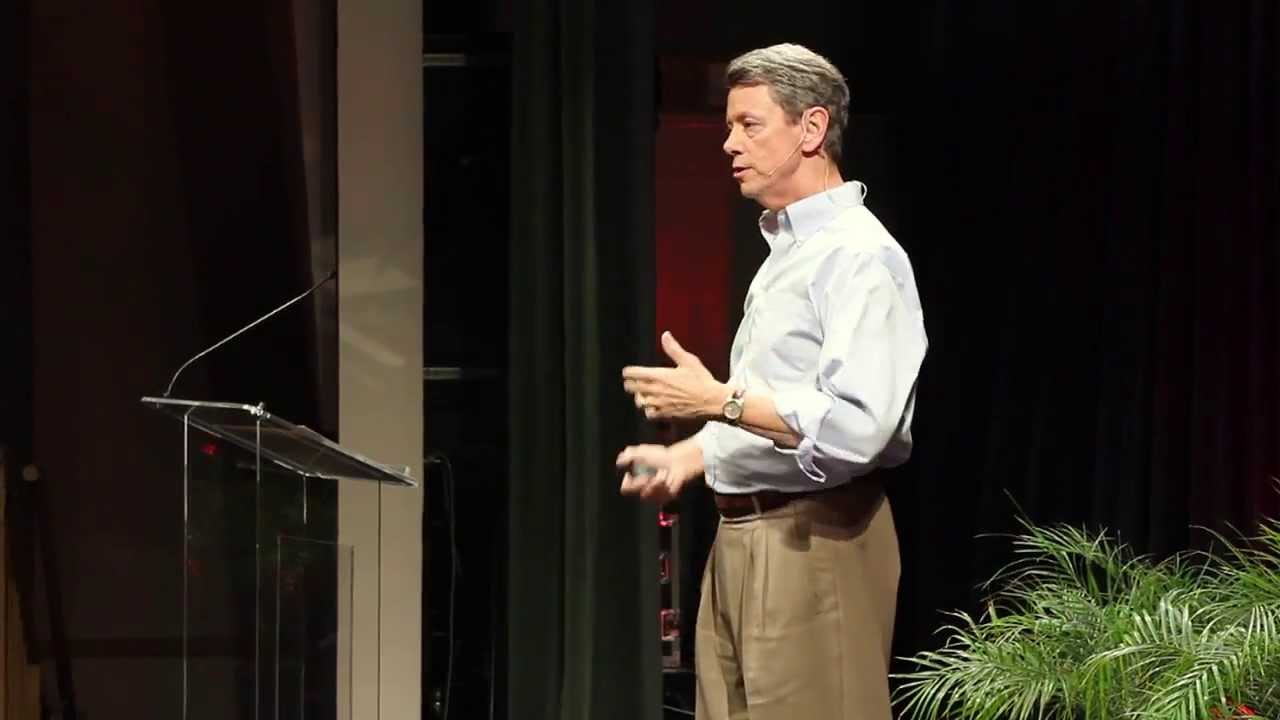
The speaker shares a poignant personal story of growing up feeling left out and overlooked, despite a loving family. Small acts of kindness — a smile, an invitation to play — initially were fleeting and easy to ignore. But by consciously paying attention to these positive moments and allowing himself to feel them fully, he noticed gradual improvements in his confidence and happiness.

Years later, as a neuropsychologist, he understood that this practice was actually changing his brain. Neuroscience shows that "neurons that fire together, wire together" — meaning repeated mental states can become lasting neural traits. In other words, by focusing on positive experiences, we can literally rewire our brains to build inner strengths like confidence, love, and resilience.

The Science Behind Stress and Growth

Stress provides a contrasting example of how experiences shape the brain. Chronic stress releases cortisol, which can strengthen the brain’s alarm system (the amygdala) while damaging areas like the hippocampus that help regulate stress. This creates a feedback loop making us more sensitive to stress over time.

Conversely, positive experiences can build and strengthen the brain areas associated with happiness and well-being. The key is learning how to “take in the good” so that these positive moments accumulate and create lasting change, rather than merely passing through our awareness.

The HEAL Method: Four Steps to Take in the Good

To overcome the brain’s negativity bias and truly absorb positive experiences, the speaker introduces a four-step method — encapsulated in the acronym HEAL:

  1. Have it — Activate a positive experience. This might be recalling a moment when you felt cared for or appreciated.
  2. Enrich it — Deepen the experience. Let it last longer, intensify the feeling, and notice its impact on your body and mind.
  3. Absorb it — Intend for the experience to sink into you, priming your memory systems to encode it deeply.
  4. Link it (optional) — Gently connect the positive experience with negative feelings or memories. This helps soothe and gradually replace negative patterns with positive ones.

By practicing these steps regularly, even small positive moments begin to accumulate into a robust inner resource.

Practical Application: An Experiential Exercise

To illustrate this, the speaker guides a simple exercise: think of someone who cares about you — a friend, family member, or even a pet. Bring that image or memory to mind and allow yourself to feel the care and warmth associated with it. Stay with that feeling for 10 to 20 seconds, fully experiencing it. This deliberate focus helps transfer the positive emotion from short-term awareness into long-term neural change.

Why Taking in the Good Matters

This method is not about ignoring life’s difficulties or pretending everything is perfect. Instead, it helps balance the brain’s tendency to over-focus on the negative by building genuine positive inner strengths. Over time, this can lead to greater happiness, better emotional regulation, and a deeper capacity for love and resilience.

The speaker quotes a touching Buddhist saying that captures the essence of this practice:

“Do not think lightly of good, saying, it will not come to me. Drop by drop is the water pot filled. Likewise, the wise one, gathering it little by little, fills oneself with good.”

Final Thoughts: The Power of the Next Minute

We cannot change the past, and the future remains uncertain, but the next minute is ours to shape. Will we let positive experiences pass us by, or will we consciously “take in the good,” enriching our minds and hearts one moment at a time?

The law of little things reminds us that both the bad and the good accumulate gradually. By choosing to focus on and absorb positive moments, we can gradually transform our brains and our lives.


How to Start Practicing HEAL Today

  • Notice small positive moments in your day — a smile, a kind word, a moment of beauty.
  • Pause and savor them for at least 10-20 seconds, fully feeling the experience.
  • Set an intention to let these good feelings sink in and become part of you.
  • Optionally, gently connect these positive feelings to any negative emotions you want to soothe.
  • Repeat often throughout your day — at meals, before sleep, or anytime you pause.

By weaving these small positive experiences into your brain’s fabric, you build lasting happiness and resilience.


Taking in the good is a simple yet powerful tool grounded in neuroscience and enriched by personal experience. It invites us to become active participants in shaping our inner world, creating a foundation of strength and joy that can carry us through life’s challenges.

May we all, little by little, fill ourselves with good.