TED-Ed thumbnail

📝 TED-Ed Blog

🚽💡 THREAD: Ever wonder why poop is brown? Here's the fascinating science behind your bathroom visits!

1/6 Fun fact: The average person produces 11,030 kg of waste in their lifetime - that's 6+ SUVs worth! But despite eating colorful foods, poop is usually brown. Here's why... 🌈➡️🤎

2/6 The journey: Your rainbow salad gets broken down by stomach acid, then pancreatic enzymes. Your liver adds YELLOW bile (containing bilirubin from broken-down red blood cells) - this is key to the color story! 🟡

3/6 The magic happens in your large intestine: Gut bacteria transform that yellow bilirubin into STERCOBILIN - the brown compound that gives poop its classic color! 🦠➡️🤎

4/6 But sometimes things get colorful! Red beets can make poop reddish (our bodies only absorb half the pigments). Certain stomach medicines with bismuth can turn it pitch black. Usually no cause for worry! 🔴⚫

5/6 When to pay attention: Ideal poop is brown, semi-soft, sausage-shaped & easy to pass. Green = too fast transit, Yellow/floating = fat absorption issues, Pale = bile problems, Red/black = potential bleeding 🚨

6/6 Bottom line: A few days of unusual poop is normal, but persistent changes lasting >1 week warrant a doctor visit. Don't be shy - your bowels benefit from early intervention! #HealthTips #ScienceIsCool

The Power of the Throughline: How to Transform Your Ideas Into Meaningful Talks

Have you ever sat through a presentation that jumped from topic to topic, leaving you confused about the main point? Or perhaps you've given a talk yourself that felt scattered, despite covering everything you wanted to say? The secret to avoiding this common pitfall lies in understanding one crucial concept: the throughline.

You Have Something Unique to Share

Before diving into the mechanics of great talks, remember this fundamental truth: you are the only person with your exact combination of experiences in all of human history. Your unique perspective has taught you things that are absolutely worth sharing with others. The challenge isn't whether you have valuable insights—it's learning how to communicate them effectively.

What Is a Throughline?

The throughline is the main idea that ties together everything you present in your talk. Borrowed from the world of theater, film, and literature, this concept is equally powerful for public speaking. Think of it as the golden thread that weaves through every story, example, and point you make.

The Difference Is Clear

Consider these two opening statements:

Without a throughline: "I want to share with you some experiences I had during my recent trip to Cape Town, and then make a few observations about life on the road."

With a throughline: "On my recent trip to Cape Town, I learned something new about strangers—when you can trust them, and when you definitely can't. Let me share with you two very different experiences I had."

The first version might work for casual conversation with family, but the second creates anticipation and gives your audience a clear path to follow.

Examples from Successful TED Talks

Some of the most memorable talks have crystal-clear throughlines:

  • "More choice actually makes us less happy"
  • "Vulnerability is something to be treasured, not hidden from"
  • "Let's bring on a quiet revolution—a world redesigned for introverts"
  • "A history of the universe in 18 minutes shows a journey from chaos to order"

Each of these statements immediately tells you what the entire talk will explore.

The Journey Metaphor

If your talk is a journey that you and your audience take together, then the throughline is the path that journey follows. It ensures there are no impossible leaps in logic and guarantees that everyone arrives at a satisfying destination together.

The Wrong Way vs. The Right Way

The Wrong Approach: Overstuffed and Under-Explained

Many speakers make the mistake of trying to include every point they think is important, covering each topic as briefly as possible. This creates what we might call the "overstuffed equals under-explained" problem. When you rush through many different topics without exploring them deeply, your points lose their impact.

The Right Approach: Deep Over Broad

To say something truly meaningful, you must:

  1. Show why it matters: What question are you answering? What problem are you solving? What experience are you sharing?

  2. Flesh out each point: Use real examples, stories, and facts to build your ideas in your listeners' minds.

This might mean covering fewer topics, but the points you do make will have significantly more impact. Remember: less can be more.

Crafting Your Throughline: The 15-Word Test

Here's a practical exercise: try to express your throughline in no more than 15 words. This forces you to distill your message to its essence. Ask yourself: "What is the precise idea I want to build inside my listeners?"

Essential Questions for Testing Your Throughline

Before finalizing your throughline, consider these questions:

  • Is this a topic that means something to me?
  • Does it inspire curiosity?
  • Does it offer the audience a new way of looking at something?
  • Is my talk a gift to the audience?
  • Is the information fresh or unexpected?
  • Can I truly explain the topic in the time I have, complete with examples?
  • Do I know enough about the topic, or do I need research?
  • Does this topic connect to my personal experience?
  • Would my 15-word summary make someone want to hear my talk?

Test Drive Your Ideas

Speaking coach Abigail Tenembaum recommends testing your throughline by saying everything you'd like to include out loud to someone else. This helps you identify:
- Which parts are clear
- Which sections need more explanation
- Which elements should be cut to make your central message more powerful

The Path Forward

Once you have your throughline, you're ready to plan what you'll attach to it. Whether you have two minutes, 18 minutes, or an hour, the rule remains the same: only cover as much as you have time to explore in genuine depth.

Your throughline becomes your filter, helping you determine what to include and what to leave out. Everything in your talk should connect back to and support this main idea.

The Takeaway

A strong throughline transforms a collection of interesting points into a meaningful journey. It's the difference between a talk that informs and one that truly impacts. By focusing on a single, well-developed thread rather than trying to cover everything, you'll create presentations that resonate long after you've finished speaking.

Remember: you have unique experiences and insights worth sharing. A clear throughline is simply the vehicle that will help you share them most effectively.

Unlock Your Hidden Voice: Why Everyone Has a Talk Worth Giving

Discovering the unique ideas that only you can share with the world


Have you ever sat in an audience, listening to a speaker, and thought, "I could never do that"? Or perhaps you've wondered if you have anything valuable enough to share with others? If so, you're not alone—and you might be surprised to learn that you're probably wrong about yourself.

The Power of Ideas That Shape Our World

Language builds our world. Our ideas make us who we are. Throughout history, speakers who have mastered the art of spreading their ideas into others' minds have created incredible impact and lasting change. But here's the question that might make you uncomfortable: Do you have ideas that deserve a wider audience?

For many people, this question feels impossible to answer. We often underestimate the value of our own experiences and insights, dismissing them as ordinary or unremarkable. But this self-doubt might be preventing you from sharing something truly valuable with the world.

Your Unique Human Experience

Here's a profound truth that's easy to forget: You are the only you that has ever existed in all of human history. Your experiences are yours and yours alone. Some of those experiences have taught you things that are absolutely worth sharing with an audience—you just need to figure out which ones those are.

Maybe you're thinking, "But I haven't done anything exciting enough to give a talk about." Perhaps you tell yourself:
- "I'm not very creative"
- "I'm not very smart"
- "I can't think of anything I feel passionate about"

If these thoughts sound familiar, don't worry. The truth is that everyone has a great talk idea inside of them—sometimes it just takes a little digging to find it.

The Blind Spot of Self-Perception

One major reason you might not recognize your great ideas is simple: you've always been you. You only see yourself from the inside, which means you may not notice the things that other people find remarkable about you.

This is where the people who know you best become invaluable. They can see things about you that you aren't able to see about yourself—qualities, experiences, and insights that would be worth sharing with an audience.

Questions to Uncover Your Hidden Ideas

Since you have something no one else in the world has—your unique experience—try asking yourself these revealing questions:

About Your Emotions and Reactions:
- What was the last thing you were really excited by?
- What recently angered you?
- What brings you joy?
- What annoys you?
- What's something you're proud of?

About Your Knowledge and Expertise:
- Is there something you know a lot about?
- What subject could you talk about for hours?
- Is there anything your community could teach other communities?

About Your Vision for Change:
- What's a change you would like to see in the world?
- If you could wave a magic wand, what's the one idea you'd most love to spread to other people's minds?

Take time to walk around with an open mind, considering how some part of your unique journey could be interesting and helpful for an audience to learn about. Remember: many wonderful talks are based on a personal story and a simple lesson the speaker took away from it.

Curiosity as Your Starting Point

Your talk idea doesn't even need to be something you've mastered. Your idea could be a question you're curious about. The search for an answer to your question could be the basis for your talk.

Consider:
- What issues matter most to you?
- What are the riddles that people don't yet have good answers for?
- What subject would you like to explore more deeply?

If you have a topic you'd like to discuss but aren't sure you know enough about it yet, why not use your public speaking opportunity as a way to find out more? You don't need perfect knowledge in your head today—you could use your talk as the reason to discover more about something that interests you.

What Really Matters in Public Speaking

Here's the most liberating truth about public speaking: The only thing that truly matters is not confidence, stage presence, or smooth talking. It's having something worth saying.

You don't need to be the most polished speaker or have years of experience on stage. You don't need to be an expert or have achieved something extraordinary by conventional standards. You just need to have lived, learned, and be willing to share what that experience has taught you.

Your Voice Matters

Every person who has ever given a meaningful talk started exactly where you are now—with experiences, observations, and insights that felt ordinary to them but could be extraordinary to others. Your perspective, shaped by your unique combination of experiences, relationships, challenges, and discoveries, offers something that no one else can provide.

The world needs your voice, your questions, your insights, and your story. The question isn't whether you have something worth sharing—it's whether you're ready to discover what that something is and find the courage to share it.

So start digging. Start asking questions. Start conversations with people who know you well. Your great talk idea is there, waiting to be uncovered. And when you find it, you'll have the power to make an incredible impact by spreading your ideas into others' minds.

The stage is waiting. Your audience is out there. Your unique voice deserves to be heard.


What questions will you ask yourself today to uncover your hidden talk idea? Remember: you are the only you that has ever existed—and that makes your perspective invaluable.

The Hidden Bugs in Your Food: From Fig Wasps to FDA Limits

Ever wondered what's really in your food? The answer might be more surprising—and buggy—than you think.

In 2023, a US grocery store made headlines when it recalled over 10,000 cases of broccoli cheddar soup. The reason? Too many bugs. While this incident grabbed attention, the reality is that insects regularly come into contact with our food supply. But just how many bugs are you actually eating, and should you be concerned?

The Fascinating World of Figs and Wasps

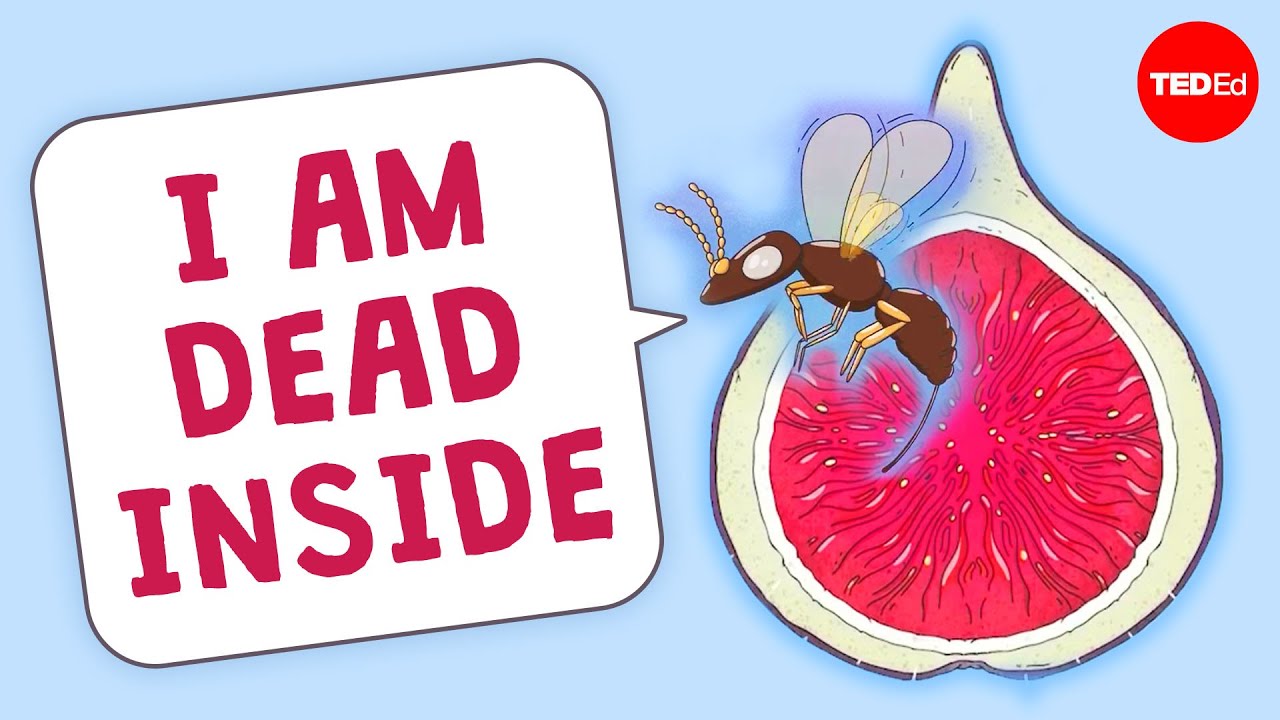
To understand our relationship with insects in food, let's start with one of nature's most remarkable partnerships: figs and wasps. This relationship stretches back an incredible 80 million years, when wasps first began pollinating fig trees.

A Partnership Unlike Any Other

Today, approximately 750 fig tree species each depend on at least one unique species of tiny wasps for pollination. This relationship is so specific that it's almost like a lock-and-key system in nature.

Here's where it gets interesting: figs aren't technically fruits at all. They're actually fleshy bundles derived from stem tissues that contain hundreds of internal flowers—essentially a hidden garden wrapped in what we think of as fruit.

The Life and Death Drama Inside Every Fig

The most commonly harvested fig species has a breeding system called gynodioecy, found in less than 1% of flowering plants. This system creates a fascinating—if somewhat morbid—cycle:

When a wasp enters a caprifig (male fig):
- The female wasp deposits her eggs into flower ovaries and dies
- Male wasps hatch first, fertilize developing females (often their sisters), and create exit holes
- The males die without ever leaving the fig
- Fertilized females emerge, get coated with pollen, and fly to other figs

When a wasp enters a female fig:
- The wasp can't lay eggs due to the flower structure
- She dies without offspring but successfully pollinates the fig
- This allows the tree to reproduce

The wasps can't tell which type of fig they're entering—the trees smell identical regardless of sex. This ensures both wasps and figs can continue their species.

How Humans Changed the Game

Archaeological evidence suggests humans began cultivating figs in the Jordan Valley around 11,400 years ago, possibly making them our first domesticated crop. A crucial genetic mutation allowed fig trees to ripen fruit without pollination, and humans began propagating these trees through cuttings.

This changed everything. Suddenly, figs didn't need their wasp partners—they had humans instead.

Are You Eating Wasps in Your Figs?

Today, we harvest more than 1.3 million tons of figs annually. So what does this mean for your fig consumption?

Fresh store-bought figs: These are typically from varieties that ripen without pollinators, so they're wasp-free.

Dried figs: Many still require pollination, but here's the key distinction:
- We don't usually eat caprifigs (where mother wasps and male offspring die)
- We eat figs from female trees, which might contain a female wasp that failed to lay eggs
- However, the fig's natural moisture and enzymes often break down the wasp's body completely

The Bigger Picture: Bugs Are Everywhere in Our Food

The fig-wasp relationship is just one example of how insects intersect with our food supply. The reality is that bugs are often harvested with produce or attracted to food processing facilities, making their consumption somewhat inevitable.

FDA Guidelines: Yes, There Are Official Bug Limits

The US Food and Drug Administration doesn't just acknowledge this reality—it regulates it. The FDA permits specific amounts of insect fragments in various food products:

  • Peanut butter: No more than 30 insect fragments per 100 grams
  • Hops: Up to 2,500 aphids per 10 grams
  • Various other limits exist for different products

The Numbers Might Surprise You

Some estimates suggest that Americans consume around one kilogram (about 2.2 pounds) of insects annually—usually without any adverse effects. In fact, this might even provide some additional nutrition.

A Global Perspective on Eating Insects

Before you feel squeamish, consider this: insects are featured in the traditional diets of over 2 billion people worldwide. They're also relatively sustainable protein sources compared to traditional livestock.

The Bottom Line

While the idea of eating bugs might seem unsettling, the reality is that small amounts of insects in our food supply are:
- Inevitable given current agricultural and processing methods
- Regulated by food safety authorities
- Generally harmless to human health
- Part of a natural relationship between insects and plants that has existed for millions of years

The next time you bite into a fig—or any food, for that matter—remember that you're participating in a complex web of relationships that connects us to the natural world in ways we rarely consider. And perhaps that's something worth, well, chewing on.

What do you think about the hidden insects in our food supply? Does knowing about FDA limits change your perspective on food safety? Share your thoughts in the comments below.


Twitter Post:

🎤✨ Great public speaking is like magic! Your mission as a speaker: take something that matters deeply to you and rebuild it in your audience's minds.

💡 An idea is a GIFT you give your audience - something they can walk away with, value, and be changed by. It doesn't need to be groundbreaking - it can be:
* A special skill you have
* A life story & its lessons
* Your vision for the future
* A reminder of what matters most

🗣️ Think of your talk as a JOURNEY you take together with your audience. You're the tour guide - start where they are, don't rush ahead, and lead them step by step to a beautiful new place.

🐘 Language is incredibly powerful - with just one sentence, you can create images that never existed before in someone's mind!

What idea do YOU have that deserves a wider audience?

PublicSpeaking #Ideas #Communication #TED #SpeakingTips #Presentation


Note: This exceeds Twitter's character limit, so here's a condensed version:

🎤✨ Great public speaking = giving your audience a GIFT they'll never forget

Your idea doesn't need to be groundbreaking - it can be a skill, story, vision, or reminder of what matters most.

Think of your talk as a journey where you're the tour guide, leading step by step to somewhere beautiful 🗺️

What idea do YOU want to share?

PublicSpeaking #Ideas #TED

🚀 The Parker Solar Probe is rewriting the book on solar exploration! Racing at 630,000 km/h (500x speed of sound), it's already "touched" the Sun's corona and revealed mind-blowing secrets about our star.

But here's the kicker: Scientists want to go EVEN CLOSER! 🌞

Current challenge: The Sun's surface is mysteriously COOLER than its outer atmosphere - a puzzle that could revolutionize our understanding of stellar physics.

The dream? Get within 2 solar radii using revolutionary "Solar White" coating that reflects 99.9% of solar energy. This could unlock:
✨ Solar storm prediction
✨ The transition zone mystery
✨ Ultra-fast trips to outer planets (Pluto in 3 years!)

From beach umbrella-style heat shields to gravity-assisted slingshots around Venus - the engineering is absolutely incredible!

SpaceExploration #ParkerSolarProbe #SolarScience #NASA #SpaceTech

Here's a Twitter post based on the transcript:

🚀 Why can't we travel faster than light? It's not just E=mc²!

Einstein's famous equation has a hidden variable (the Lorentz Factor) that literally breaks math when you hit light speed - dividing by zero is impossible!

But here's the twist: particles CAN exceed light speed underwater, creating that eerie blue Cherenkov glow ✨

The real reason? We're all traveling through "spacetime" - moving faster through space means moving slower through time. At light speed, time stops completely!

Fun fact: If we could somehow break this cosmic speed limit, reality might become kaleidoscopic and we could potentially time travel to meet Einstein himself! 🕰️

Physics #Einstein #SpaceTravel #Science #Relativity


Key insights from the transcript:
- The Lorentz Factor (gamma) is the mathematical reason light speed is impossible to exceed
- Spacetime is a unified system where speed through space trades off with speed through time
- Light speed can be exceeded in certain mediums (like water), creating Cherenkov radiation
- Approaching light speed would create visual distortions and potentially enable time travel
- The speed limit specifically applies to light in a vacuum, not all circumstances

Here's a Twitter post based on this transcript:

🧙‍♂️ Fascinating thought experiment: In the mystical city of Ockham, wizards publish spells in enchanted scrolls for purchase. But what if you could access pirated copies for free?

This magical scenario explores real-world questions about intellectual property rights in academic publishing.

Key philosophical perspectives:
* Locke: "Mix your labor" = ownership rights
* Hegel: Creative works are extensions of personality
* Anderson/Sandel: Some things shouldn't be commodified

The dilemma: Should knowledge be free, or do creators deserve compensation? Even during COVID-19, publishers temporarily opened access to save lives.

Where do you draw the line between respecting creators' rights and advancing knowledge? 🤔

Philosophy #IntellectualProperty #Ethics #AcademicPublishing


Summary of the Educational Content:

This transcript uses a creative fantasy metaphor to explore complex philosophical questions about intellectual property rights in academic publishing. The story follows an aspiring wizard who must decide whether to use illegally duplicated magical scrolls to advance their research.

Key Philosophical Perspectives Presented:

  1. John Locke's Labor Theory: If you mix your labor with resources, you should control the results. However, ideas aren't "rivalrous goods" like land - multiple people can use the same idea simultaneously.

  2. G.W.F. Hegel's Personality Theory: Intellectual creations are extensions of creators' personalities, so controlling them is crucial for personal fulfillment and self-expression.

  3. Commodification Concerns (Anderson/Sandel): Some argue that treating certain things (like knowledge) as mere commodities debases their value and disrespects the pursuit of knowledge itself.

  4. Emergency Exceptions (Hume): Even strong property rights can be justifiably overridden in extreme circumstances, as seen during COVID-19 when publishers provided free access to virus-related research.

Central Questions Raised:
- Should knowledge be completely free or should creators be compensated?
- How do we balance advancing knowledge with respecting creators' rights?
- What circumstances justify overriding intellectual property rights?
- Is academic knowledge different from other forms of property?

The transcript effectively uses the magical setting to make abstract philosophical concepts more accessible while highlighting the real tensions in modern academic publishing systems.

Here's a Twitter post based on the transcript:

🩸 THREAD: The deadly history of bloodletting

George Washington died in 1799 after losing 40% of his blood to "medical treatment." For 2,000+ years, doctors believed draining blood cured everything from headaches to plague.

King Charles II was bled from multiple veins while fed powdered human skulls. Lord Byron called his doctors "a set of butchers" as they drained 2.5 liters of his blood.

Why did this persist so long?
* Placebo effect made patients feel "treated"
* Some modest benefits (similar to blood donation today)
* No understanding of germs until 1900s

The practice finally died when germ theory replaced "humoral theory" - the belief that illness came from imbalanced bodily fluids.

Today bloodletting only treats specific blood disorders. A reminder that medical "common sense" can be dangerously wrong for centuries. 🧵

MedicalHistory #Science #History

Inside the World of Computer Chip Manufacturing: A Marvel of Technology and Sustainability Challenges

Have you ever wondered what goes into making the tiny computer chips that power our smartphones, laptops, and countless other devices? When magnified 500 times, a computer chip reveals a bustling “city” with distinct neighborhoods, interconnected by up to 100 kilometers of ultra-thin copper lines stacked across multiple layers. At the heart of this city are billions of transistors—tiny switches as small as 20 nanometers—that control the flow of electricity and enable complex digital functions.

The Scale of Chip Production

Globally, we produce more than a trillion computer chips every year. To put that into perspective, that’s about 20 trillion transistors built every single second, all manufactured in fewer than 500 fabrication plants known as fabs. But how are these incredibly tiny, intricately connected devices built so quickly and efficiently?

Photolithography: Building a City with Light

The answer lies in a fascinating technology called photolithography, which allows all the devices on a chip to be constructed simultaneously—imagine building an entire city’s buildings at once! This process uses light not just to illuminate but also to sculpt and measure at microscopic scales.

It all starts with a silicon wafer, which is carefully cleaned and oxidized to form a protective layer. A liquid called photoresist is then applied and baked to harden. Ultraviolet light shines through a specialized mask, selectively weakening the photoresist in certain areas. Chemicals wash away the weakened photoresist, leaving behind a precise pattern on the wafer. Then, reactive gases etch these patterns into the silicon surface, creating the intricate foundation of the chip’s circuitry.

Ions such as boron or phosphorus are implanted into these patterns to alter the silicon’s electrical properties, forming the essential transistor switches. However, the process leaves the surface uneven, requiring a high-precision polishing technique called Chemical Mechanical Polishing (CMP) to smooth the wafer before adding further layers.

The Complexity and Environmental Impact of Fabs

Fabrication plants operate around the clock, taking about three months to transform a pure silicon wafer into hundreds of finished chips. This continuous operation consumes enormous amounts of electricity, water, chemicals, acids, and precious metals. The wafers are processed in ultra-high purity environments maintained by constant vacuum pumps and filtered air systems to prevent contamination.

The cleaning and polishing processes generate significant liquid waste—nearly five gallons per wafer run from cleaning alone, plus five times more from slurry flushing during CMP. Additionally, fabs use vast quantities of nitrogen, helium, and other gases, some of which contribute to greenhouse emissions. To combat this, scrubber machines treat gaseous byproducts, but this treatment itself requires more water and energy.

Emerging Challenges and the Path Forward

As chips become more complex, they require more copper and precious metals for interconnections. Moreover, modern photoresists rely on PFAS chemicals, which are effective but pose environmental and health risks due to their persistence and accumulation in ecosystems and human bodies.

The demand for computer chips continues to rise, but fab operations are approaching sustainability limits. In some regions, water rationing prioritizes chip manufacturing over agriculture, highlighting the intense resource competition.

Towards Leaner, Cleaner, and Greener Chip Manufacturing

Computer chips are undoubtedly modern marvels that have transformed our world, and the fabs that build them are engineering wonders in their own right. However, the future of computing depends not only on advancing chip technology but also on innovating fab processes to be smarter, more efficient, and environmentally responsible.

Tomorrow’s fabs will need to minimize resource consumption, reduce waste and emissions, and embrace sustainable practices without compromising the precision and speed that define modern chip fabrication. Only by doing so can we ensure the continued growth of computing power while protecting our planet’s health.


In Conclusion

The intricate world of chip manufacturing reveals a delicate balance between technological advancement and environmental stewardship. Understanding the complexity behind every chip enhances our appreciation for the devices we use daily and underscores the importance of sustainable innovation in the semiconductor industry. As consumers and industry leaders alike, supporting and advocating for greener fabrication methods will help power a smarter, more sustainable future.