 YouTube Deep Summary
 Extract content that makes a tangible impact on your life
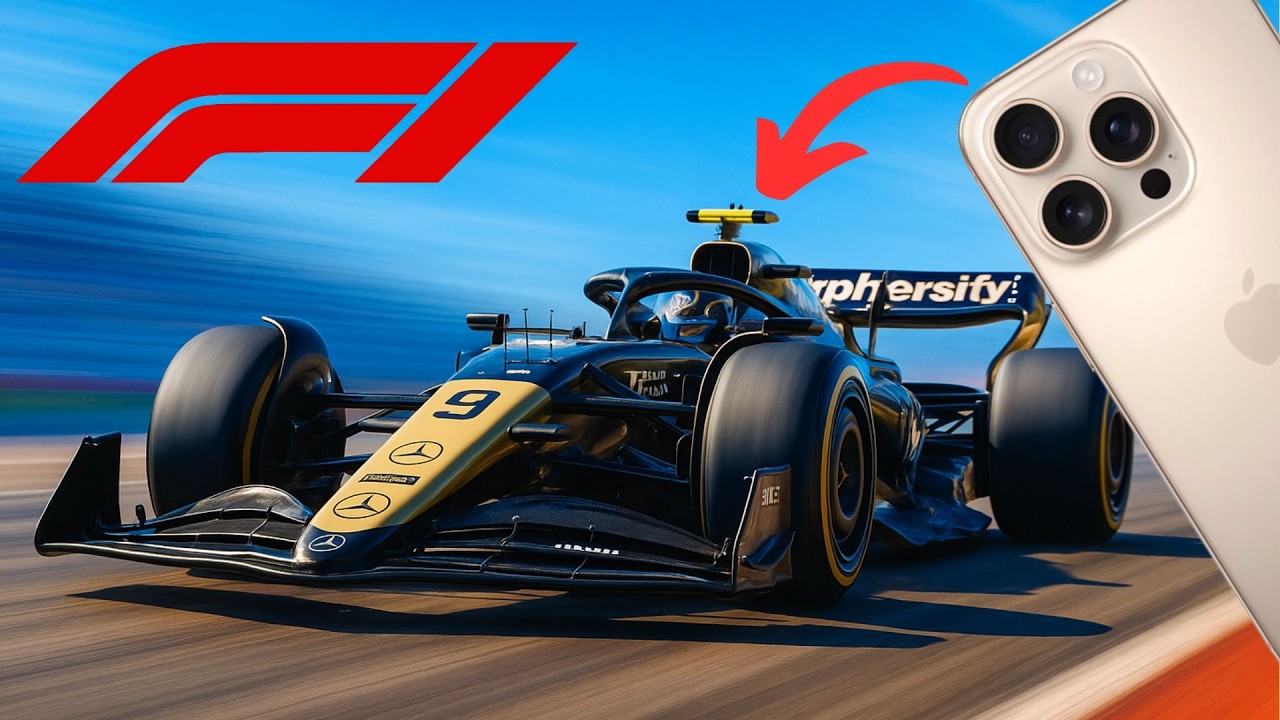
How Apple Secretly Filmed a Hollywood Movie in Real F1 Races
Andru Edwards • 2025-06-20 • 5:22 minutes • YouTube
📚 Chapter Summaries (6)
🤖 AI-Generated Summary:
Inside the Thrilling Fusion of Formula 1 Racing and iPhone Technology: How Apple Revolutionized Cinematic Racing Footage
Have you ever wondered what it feels like to race a Formula 1 car at 200 miles per hour—from the driver's seat? Hollywood often tries to showcase such speed with green screens or CGI, but what if the most breathtaking racing footage ever captured came from the camera technology you carry in your pocket? At Apple’s recent WWDC event, a mind-blowing secret was revealed: Apple has engineered a custom camera based on the iPhone 15 Pro sensor, designed specifically to capture the raw intensity of Formula 1 racing like never before.
A Cinematic Vision Like No Other
Director Joseph Kosinski, famed for Top Gun: Maverick, envisioned a new way to make audiences feel the experience of an F1 driver—every vibration, every insane G-force inside the cockpit. Traditional broadcast cameras and action cams like GoPros simply couldn’t deliver the immersive, cinematic quality he wanted. Large cinema cameras are too bulky and heavy for a $10 million race car, and existing F1 broadcast cameras focus on live transmission quality, which falls short of Hollywood standards.
Apple’s Ingenious Solution: A Mini iPhone Inside an F1 Car
Apple’s response was ingenious. They built a tiny, custom camera module using the iPhone 15 Pro’s sensor, chip, and battery, miniaturized to perfectly fit inside the exact housing shape and weight of the existing F1 camera fin on the cars. This ensured no disruption to aerodynamics or vehicle performance. The camera shoots full 4K ProRes video in log color with ND filters, handling extreme heat, vibration, and G-forces that would challenge any smartphone.
Real Races, Real Teams, Real Innovation
This wasn’t a mere tech demo. About 20 of these modules were developed in close collaboration with Apple’s hardware team, Mercedes F1 engineers, and even Lewis Hamilton, who joined as a producer and racing consultant. The cameras were mounted in multiple spots on real race cars—nose, cockpit, side pods—and controlled wirelessly via iPad in the pit lane to download raw, uncompressed footage instantly.
During actual Grand Prix events, Apple’s camera modules replaced official F1 camera housings on teams like Ferrari and Red Bull, capturing footage while the cars raced at speeds pushing 180 mph. The result? Jaw-dropping angles—from nose cams inches off the ground to lenses aimed right into the driver’s eyes mid-corner—offering perspectives never before seen on screen.
Hollywood Meets High-Tech Racing
The footage seamlessly blends with shots from high-end cinema rigs, delivering a Hollywood-level visual experience complete with cinematic color grading and authentic motion blur, all captured at real F1 speeds. The innovations developed for this project—log capture, color workflows, control apps—have now been integrated into the iPhone 15 Pro, meaning the same technology behind this racing epic is available to everyday users.
A New Era of Creativity and Tech
This breakthrough shows that sometimes the limitations of our gear are not about hardware itself but the imagination to push technology further. Apple’s collaboration on this F1 movie illustrates what happens when cutting-edge tech meets the thrill of sport and storytelling.
I had the privilege to watch the F1 movie premiere at Apple Park’s Steve Jobs Theater, and while the film itself was fantastic, I’m eagerly awaiting the IMAX experience to fully appreciate the groundbreaking visuals.
For more insights from WWDC and other tech breakthroughs, stay tuned and subscribe for upcoming videos. This fusion of Apple technology and high-speed racing is just the beginning of what’s possible when innovation accelerates to full throttle.
By Andru Edwards
📝 Transcript Chapters (6 chapters):
- • Apple Used iPhone Sensors to Shoot F1 - 0:00
- • Apple Custom F1 Car Camera - 0:34
- • Why Were Special Cameras Necessary for F1? - 1:54
- • The Tech Behind the F1 Camera with iPhone Sensor - 3:00
- • Bringing a Feeling of Realism to the F1 Movie - 3:48
- • The F1 Camera Tech Included in iPhone 15 Pro and Beyond - 4:26
📝 No Transcript Available
Click the "Extract Transcript" button above to download the transcript for this video.