 YouTube Deep Summary
 Extract content that makes a tangible impact on your life
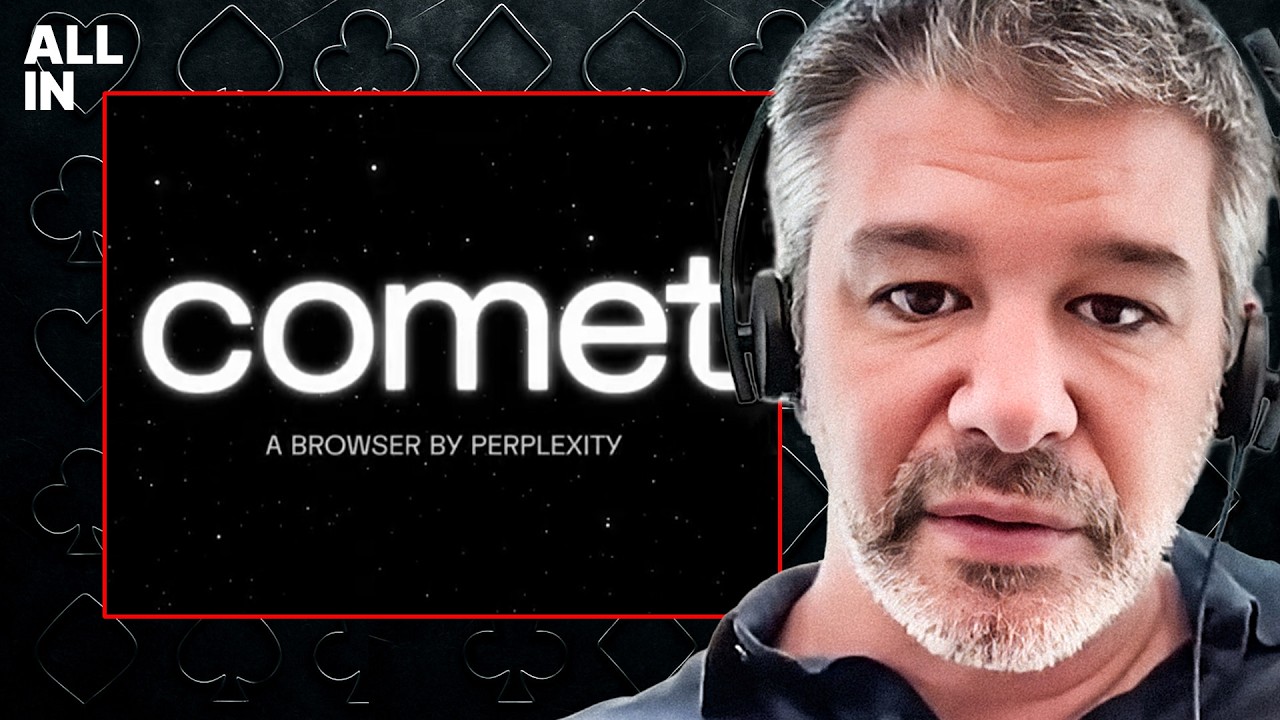
Every Software CEO Is Terrified Of This AI Innovation - Travis Kalanick
All-In Podcast • 2025-07-15 • 8:14 minutes • YouTube
📚 Chapter Summaries (7)
🤖 AI-Generated Summary:
Похоже, что транскрипт видео недоступен или произошла ошибка при его извлечении. Пожалуйста, предоставьте текст транскрипта или другой материал для анализа, чтобы я мог создать подробное и структурированное резюме согласно заданным требованиям.
📝 Transcript Chapters (7 chapters):
📝 Transcript (243 entries):
Travis, your thoughts on this category? Anything come to mind for you in terms of, you know, feature sets that would be extraordinary here? I know you you like to think about products and the consumer experience.
>> It's really interesting. So, you know, I've been spending, as you guys know, I've been spending my time on real estate and construction and robotics. And so I' I've been out of the this kind of consumer software game for a long time. But it's super interesting over the last six months. There have been a a number of consumer software CEOs.
Like when I hang out with them or whatever, they're like, yo, how are we going to how are we going to keep doing what we do when the agents take over? >> Yeah. The paradigm shift is so profound that the idea that you would visit a web page goes away and you're just in a chat dial. you know, you have an agent that's just taking care of your flights for you.
>> So, I I kind of I I think there's a leaprog over that. I think it's just like you tell something, yo, I want to go to New York. Can you you know, I'm sort of looking at this time range. Can you just go find something I'm probably going to like and give me a couple options?
>> Yeah. And it's just a whole you have an interface and then you know is perplex is this thing that you just showed on perplexely is that the interface or do I just have an agent that just goes and does everything for me and is this the start of that? I you know I just haven't spent enough time. I I do know that every consumer software CEO that has an app in the app store is tripping. They're tripping right now.
>> And I mean big boys. I meet guys with real stuff and sometimes I I'm doing like almost like therapy sessions with them. I'm like, "It's gonna be fine. You actually you actually have stuff. You have a mo you have real stuff that's of value. They can't replace it with an agent." And they're like, >> "So, you're lying to them. You're doing hospice care and you're telling them everything's going to be okay, but the patient options on Robin Hood while he's like, "Yeah, yeah, tell me more. Tell me more.
>> All these things. >> There's certain things that are protected. There's certain not things that aren't. That's all.
>> Well, let's talk about that because the you and I are old enough to remember uh general magic. This vision was out there a long time ago with personal digital assistance and you would just talk to an agent. It would go do this for you. This feels like a step to that where it does all the work for you, presents you the final moment and says approve.
>> Like a concierge or a butler. Yeah, >> I think what you're describing is what we want. But I think more specifically for today, Keith and Travis totally nail it. Look, I think building a browser is an absolutely stupid capital allocation decision. Just totally stupid and unjustifiable in 2025. Specifically for Perplexity, I think their path to building a legacy business is to replace Bloomberg.
Everything that they've done in financial information and financial data in going beyond the model has been excellent. As somebody who's paid $25,000 to Bloomberg for many years, the terminal is atrocious. It's terrible. It's not very good. It's very limited.
and anybody that could build a better product would take over a hundred billion dollar enterprise because I think it's there for the taking. I wish that perplexity would double and triple down on that. And so when you see this kind of >> random spraw, >> let's do it, Jimoth. Let's just go do it.
>> When you do the random spraw, I think it doesn't work. But I just want to say like >> a browser is like the dumbest thing to build in 2025 because in a world of agents, what is a browser? It's a glorified markup reader. It's like handling HTML. It's handling CSS and JavaScript. It's doing some networking.
It's doing some security. It's doing some rendering. But it's like this is all under the water type stuff. I get it that we had to deal with all that nonsense in 1998 to try LIOS or Google for the first time. But in 2025, there's something that you just speak to and eventually there's probably something that's in your brain which you just think and it just doesn't you're thinking I need a flight to JFK or at the maximum today in a very elegant beautiful search bar you type in get me a flight and it already knows what to do.
>> Keith in some ways this is a step towards that ultimate vision. So you'd think it's worth it to you know sort of perplexity to make this way point perhaps if you look at it as a waypoint between the ultimate vision which is a command line and earpiece.
>> How do you get distribution Jason for the 19th web browser in 2025? Well, yeah, that is a challenge and I think most people are speculating Apple, which has a lot of users, might buy Perplexity or do a deal with Perplexity and give them that distribution because of the Justice Department case against Google.
So, there's been a lot of speculation about that. But Keith, what do you think? >> Well, I don't think they'd buy anything worth it. Like, what do what is Apple going to get? We continue this failed strategy of Apple, >> right? Apple's missed every possible window on AI and continues to miss it and it has cultural I think the CEO has challenges I think culturally they have challenges I think they have infrastructure challenges so it's it's not an easy fix but buying perplexity is not going to help like chas strategy is actually pretty coherent one for perplexity quap perplexity uh so I think that >> pick a vertical and own it strategy in this case >> not not a bad idea um especially because you need unique data sources some of those data sources may or may not license their data to open AAI. So you can do some clever things there, but um I don't think there's any residual value that Apple will get out of perplexity except there's some product taste, but what are you going to spend like a billion dollars for product taste? I mean Mark's spending hundreds of millions of dollar hundreds of billions or whatever he's spending these days and you know Grock if anything Grock for shows that Mark really doesn't need to just spend money to build a whole new team because everything they've done in AI is also missed the boat. Well, I mean, Keith, the way you phrase it there almost makes it worth it for Apple to throw a Hail Mary, have a team with some taste because that's how they tend to do things is something that is elegant. And why not just throw your search to it, throw 10 billion at what's elegant would be if there's a bunch of agents and just a chat box.
>> Seeing a bunch of visual diarrhea is not elegant. >> It's lazy. >> Off on our on our little Bloomberg clone, I'll give you naming rights. So you can call it that.
>> Oh, you like you like it. >> Polyhapatia. So, hey, can somebody can somebody uh bring up the polyhapatia? >> You know what's so funny? >> It just rolls right off your tongue.
>> TK, listen. We were trying to do a screen of companies and it maxes out at five companies on a specific type of screen where you're like you're trying to compare stock price to EB and you're like, okay, I can only choose five, I guess. So, which five should I choose?
Lefont was on right like two episodes ago. He was like I can't pull this up. It's limited to six companies. >> Dude, you it's So what do people use Bloomberg?
>> They use it for the messaging. Now like my team has traded huge positions via text message on Bloomberg. So there is something very valuable there. >> But the core usability and the core UI of that company has not evolved.
>> I have my contribution >> and complexity is very good at that by the way. It they they do a very good job. >> I got a new domain named Travis. Let this one just sink in here. This is my way to weasel my way into the deal.
Begin.com. >> begin.com. >> You own that, don't you?
>> I do. >> I'm just a little I snipe some good ones once in a while. I got begin.com and I got annotated.com. Those are my two little domain. You're like you're like one of these old people that show up at those road show and then road show and you're like, "Oh, I have this thing that I bought 1845." >> Guys, Jason Jason is Jason is the daddy and god daddy. Okay, that's just what it is. Your dad your dad.
>> That's what it is.